US Trade Developments 2025: Reshaping Global Commerce

The United States is actively engaging in critical trade negotiations in 2025, aiming to redefine global commerce through strategic partnerships and updated agreements that will significantly influence international economic dynamics.
As the global economic landscape continues to evolve at an unprecedented pace, understanding the intricate web of US Trade Developments 2025 becomes paramount. These negotiations are not merely about tariffs and quotas; they are about forging new alliances, strengthening existing ones, and strategically positioning the United States in an increasingly interconnected world. The outcomes of these discussions will undoubtedly reshape global commerce and influence countless industries, from technology to agriculture, impacting businesses and consumers alike.
The evolving landscape of US trade policy
The year 2025 marks a crucial juncture for US trade policy, driven by a confluence of geopolitical shifts, technological advancements, and evolving domestic priorities. The administration is navigating a complex environment, balancing the need for economic growth with concerns over national security, labor standards, and environmental sustainability. This dynamic interplay is leading to a re-evaluation of long-standing trade agreements and the pursuit of new frameworks.
Historically, US trade policy has swung between multilateralism and bilateralism, often reflecting the prevailing economic and political climate. However, the current approach appears to favor a more targeted, strategic engagement, focusing on key partners and specific sectors. This shift is partly a response to the challenges posed by global supply chain vulnerabilities exposed during recent crises and the increasing economic influence of non-traditional trade powers.
Strategic re-evaluation of existing agreements
Many existing trade agreements, some decades old, are under scrutiny. The US is actively reviewing their effectiveness in promoting fair trade, protecting intellectual property, and ensuring equitable market access. This re-evaluation often involves intense discussions with partner countries, aiming to modernize clauses and address contemporary issues that were not foreseen when these agreements were initially drafted.
- USMCA (United States-Mexico-Canada Agreement): Periodic reviews are integral to USMCA, and 2025 will likely see discussions focused on digital trade, labor provisions, and environmental commitments, ensuring the agreement remains relevant and robust.
- Trade negotiations with the EU: While a comprehensive free trade agreement remains elusive, targeted sectoral agreements are being pursued, particularly in areas like technology standards, climate policy, and critical minerals, reflecting a shared commitment to addressing global challenges.
- Indo-Pacific Economic Framework for Prosperity (IPEF): This framework, while not a traditional free trade agreement, is a cornerstone of US engagement in the region, focusing on pillars like supply chain resilience, clean energy, and digital economy standards.
The emphasis is on creating more resilient and adaptable trade relationships that can withstand future economic shocks and geopolitical pressures. The goal is to move beyond mere tariff reductions to encompass a broader range of economic and strategic considerations, fostering deeper integration and cooperation among like-minded nations.
Key partners and their roles in 2025 negotiations
The success of US trade policy in 2025 hinges on its engagements with a diverse array of key partners, each bringing unique economic strengths and geopolitical considerations to the negotiating table. These partnerships are not monolithic; they represent a spectrum of relationships, from long-standing allies to emerging economies, all vital to the US’s strategic trade objectives.
The focus extends beyond traditional economic powerhouses to include nations critical for diversifying supply chains, accessing new markets, and collaborating on technological advancements. The administration is keenly aware that a balanced approach, respecting the sovereignty and economic interests of each partner, is essential for securing mutually beneficial outcomes.
The European Union: Navigating complex economic ties
The relationship between the US and the EU is one of the most significant and multifaceted in global trade. In 2025, negotiations are likely to concentrate on resolving long-standing disputes, harmonizing regulatory standards, and collaborating on emerging technologies. Areas such as digital taxation, data privacy, and climate-related trade measures will be prominent on the agenda.
- Digital Services Taxes: Continued efforts to find a global consensus on taxing digital giants, avoiding retaliatory tariffs.
- Green Trade Initiatives: Collaboration on carbon border adjustment mechanisms and promoting sustainable trade practices.
- Technology Standards: Discussions aimed at aligning standards forAI, cybersecurity, and and other critical technologies to facilitate transatlantic trade and innovation.
Despite occasional friction, both the US and the EU recognize the strategic importance of their economic partnership, particularly in addressing challenges posed by other global players. The aim is to strengthen this alliance through pragmatic agreements that foster innovation and economic resilience.
Indo-Pacific nations: A pivot to strategic partnerships
The Indo-Pacific region remains a focal point for US trade strategy, reflecting its economic dynamism and geopolitical significance. Beyond IPEF, bilateral and plurilateral engagements with countries like Japan, South Korea, Australia, and India are crucial. These negotiations often involve discussions on intellectual property protection, market access for US goods and services, and cooperation on critical supply chains.
The emphasis is on building a network of resilient and secure supply chains, particularly for semiconductors, rare earth minerals, and other strategic goods. This approach aims to reduce dependencies and enhance economic security for the US and its allies in the region. The goal is to create a more integrated and stable economic environment across the Indo-Pacific.
Reshaping global supply chains and resilience
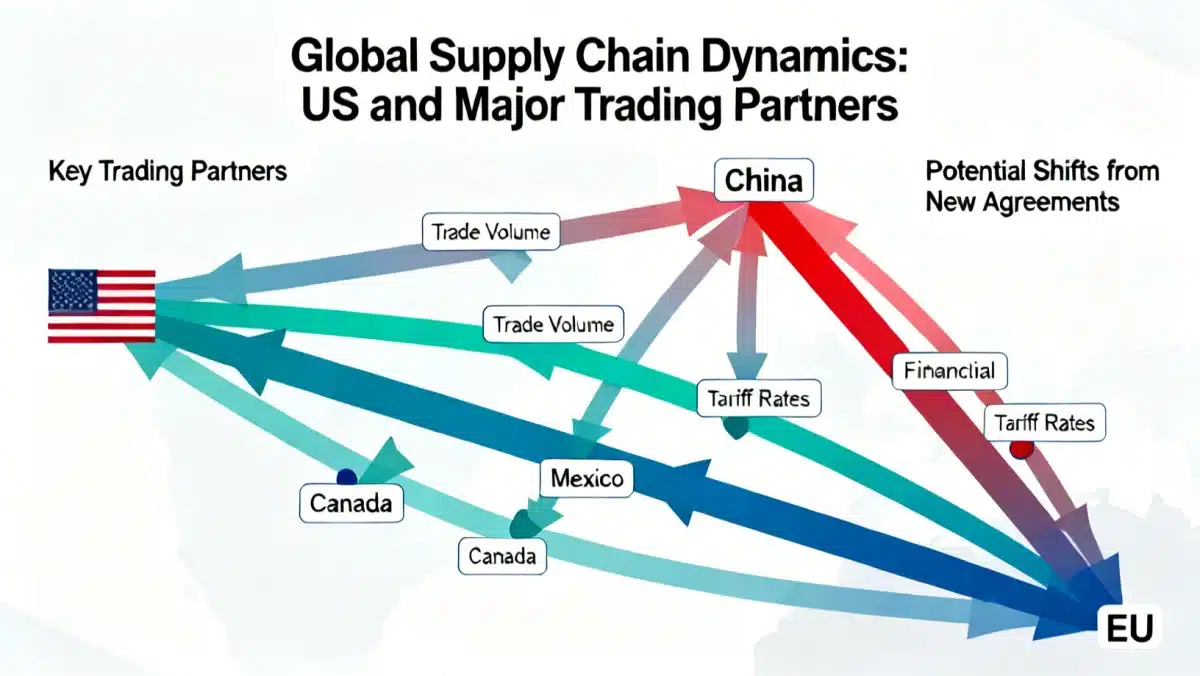
The vulnerabilities exposed during the COVID-19 pandemic and subsequent geopolitical events have underscored the urgent need for more resilient global supply chains. In 2025, US trade negotiations are heavily focused on de-risking and diversifying these vital networks, moving away from over-reliance on single sources and building redundancy.
This strategic shift involves not only dialogues with traditional allies but also engagement with new partners capable of contributing to a more distributed and secure manufacturing base. The US government is actively incentivizing domestic production and nearshoring, while simultaneously fostering international cooperation to ensure the flow of essential goods and components.
Diversification and nearshoring initiatives
Policies are being developed to encourage US companies to diversify their sourcing strategies, exploring new regions and countries for manufacturing and component supply. Nearshoring, the practice of moving production closer to home, is also gaining traction, particularly for critical industries. This approach aims to reduce transit times, lower logistical costs, and enhance responsiveness to market demands.
- Critical minerals: Agreements with countries rich in critical minerals are being prioritized to secure reliable supplies for green technologies and defense industries.
- Semiconductor manufacturing: Investments and partnerships are focused on expanding semiconductor production capacity both domestically and with trusted allies.
- Pharmaceuticals and medical devices: Efforts to diversify the supply base for essential medicines and medical equipment to prevent future shortages.
The goal is not to decouple entirely from global supply chains but to strategically reconfigure them to be more robust and less susceptible to external shocks. This requires a delicate balance between efficiency and security, with long-term resilience being the ultimate objective.
The impact of technology and digital trade
Digital trade is no longer a niche aspect of international commerce; it is rapidly becoming its backbone. In 2025, US trade negotiations are heavily influenced by the imperative to establish clear rules and standards for the digital economy, addressing issues ranging from data flows and cybersecurity to artificial intelligence and emerging technologies.
The US advocates for an open, secure, and reliable internet, promoting policies that facilitate cross-border data flows while respecting privacy concerns. However, this stance often clashes with countries that favor more restrictive approaches, leading to complex negotiations aimed at finding common ground that supports innovation without compromising national interests.
Setting standards for the digital economy
Establishing international norms for digital trade is a top priority. Discussions cover a wide array of topics crucial for businesses operating in the digital realm.
- Data localization: Challenging requirements that mandate data be stored within national borders, advocating for free flow of data with appropriate safeguards.
- Cybersecurity: Promoting international cooperation and common standards to combat cyber threats and ensure the security of digital infrastructure.
- Artificial intelligence governance: Engaging in dialogues to develop ethical guidelines and regulatory frameworks for AI that foster innovation while mitigating risks.
The outcome of these negotiations will significantly impact the ability of US tech companies to operate globally and will shape the future of digital innovation. The aim is to create a predictable and transparent regulatory environment that encourages investment and growth in the digital sector.
Environmental and labor considerations in trade agreements
Modern US trade policy increasingly integrates environmental protection and labor rights as core components, reflecting evolving societal values and policy priorities. In 2025, these considerations are not merely add-ons but are often central to the negotiating mandate, influencing market access and investment decisions.
The US seeks to ensure that trade does not come at the expense of environmental degradation or the exploitation of workers. This approach aims to create a level playing field, preventing countries from gaining an unfair competitive advantage through lax environmental or labor standards. It also aligns with broader US foreign policy objectives of promoting sustainable development and human rights.
Promoting sustainable and ethical trade
New trade agreements and updates to existing ones are incorporating stronger provisions related to environmental sustainability and labor practices. These include:
- Climate commitments: Requiring adherence to international environmental agreements and promoting trade in green goods and services.
- Forced labor prohibitions: Enhanced measures to prevent goods produced with forced labor from entering the US market.
- Worker rights: Strengthening provisions related to freedom of association, collective bargaining, and safe working conditions.
The integration of these elements reflects a holistic view of trade, recognizing its profound impact on societies and the planet. The goal is to leverage trade as a tool for positive change, encouraging partners to adopt higher standards and contribute to a more equitable and sustainable global economy.
Challenges and opportunities for US businesses
The evolving landscape of US trade policy in 2025 presents both significant challenges and compelling opportunities for American businesses. Navigating new regulations, understanding shifting market dynamics, and adapting to altered supply chain realities will be crucial for success. However, these changes also open doors to new markets, foster innovation, and enhance competitiveness.
Businesses will need to be agile and forward-thinking, closely monitoring policy developments and adjusting their strategies accordingly. Proactive engagement with trade associations and government agencies can provide valuable insights and help shape future policies, ensuring that business interests are adequately represented.
Adapting to new trade frameworks
The shift towards more targeted and strategic trade agreements means that businesses may face a patchwork of regulations across different markets. This necessitates a thorough understanding of each agreement’s specific provisions.
- Compliance costs: Businesses may incur costs related to adapting to new compliance requirements, from environmental standards to data privacy regulations.
- Market access: New agreements could open up previously restricted markets, offering significant growth opportunities for US exporters.
- Supply chain optimization: The push for resilience and diversification will require businesses to re-evaluate and potentially restructure their supply chains.
Despite the complexities, the overarching goal of these trade developments is to create a more stable and predictable international trading environment. For businesses that can effectively adapt and innovate, 2025 offers a chance to solidify their global presence and capitalize on emerging opportunities.
| Key Aspect | Brief Description |
|---|---|
| Policy Re-evaluation | Modernizing existing trade agreements and pursuing targeted engagements to reflect current global challenges and priorities. |
| Key Partnerships | Intensified negotiations with the EU and Indo-Pacific nations to strengthen alliances and address specific economic and geopolitical interests. |
| Supply Chain Resilience | Focus on diversification, nearshoring, and strategic sourcing to enhance the robustness and security of global supply chains. |
| Digital Trade & Standards | Establishing international rules for data flows, cybersecurity, and AI to support an open and secure digital economy. |
Frequently asked questions about US trade developments in 2025
The primary goals include modernizing existing agreements, enhancing supply chain resilience, establishing fair digital trade standards, and integrating environmental and labor protections into trade frameworks to foster sustainable and equitable global commerce.
US trade policy is actively seeking to diversify and de-risk global supply chains through nearshoring initiatives and strategic partnerships, aiming to reduce over-reliance on single sources and enhance overall resilience against future disruptions.
Digital trade is a central focus, with negotiations aiming to establish international standards for data flows, cybersecurity, and AI governance. The goal is to promote an open and secure internet while addressing privacy and national security concerns.
Key partners include the European Union, with whom the US seeks to harmonize regulations and collaborate on technology, and various Indo-Pacific nations, crucial for supply chain diversification and strategic economic engagement.
Environmental protection and labor rights are increasingly core components, with new agreements incorporating stronger provisions on climate commitments, forced labor prohibitions, and worker rights, promoting sustainable and ethical trade practices globally.
Conclusion
The intricate tapestry of US Trade Developments 2025 reveals a nation actively recalibrating its approach to global commerce. Through strategic negotiations with key partners, a steadfast commitment to supply chain resilience, and a forward-looking stance on digital trade, the United States is not just reacting to global shifts but proactively shaping them. These efforts signal a move towards a more robust, equitable, and sustainable international trading system, ultimately influencing economic stability and growth for decades to come, both domestically and across the globe.