College Affordability in 2025: 3 Innovative University Models

US universities are actively developing innovative financial and educational models, such as income-share agreements, competency-based education, and micro-credentialing, to address the pressing issue of college affordability by 2025, aiming to make higher education more accessible and relevant for a broader student population.
The rising cost of higher education in the United States has become a significant barrier for countless aspiring students, prompting an urgent need for transformative solutions. By 2025, universities are not just tweaking existing systems; they are pioneering entirely new approaches to enhance college affordability in 2025. This article delves into three such innovative models emerging across US institutions, designed to reshape how students finance and experience their education, ultimately making it more accessible and aligned with real-world value.
The looming challenge of college costs
The escalating tuition fees, living expenses, and associated costs of a college degree have reached a critical point, forcing many prospective students to reconsider their higher education aspirations. This financial burden extends beyond initial enrollment, often leading to substantial student loan debt that can impact graduates for decades. Understanding the multifaceted nature of this challenge is the first step toward appreciating the innovative solutions currently being developed.
For decades, the traditional model of higher education has remained largely unchanged, characterized by fixed tuition, semester-based learning, and a reliance on federal and private loans. However, the economic realities of the 21st century, coupled with shifting workforce demands, necessitate a departure from this status quo. Universities are now under immense pressure from students, parents, and policymakers alike to provide more transparent, equitable, and value-driven educational pathways.
Understanding the debt crisis
Student loan debt in the US has surpassed $1.7 trillion, affecting millions of Americans. This crisis not only hampers individual financial well-being but also has broader economic implications, limiting consumer spending, homeownership, and entrepreneurship. The sheer scale of this debt is a primary driver behind the push for new affordability models.
- Average student loan debt per borrower now exceeds $30,000.
- The default rate on student loans remains a significant concern for borrowers.
- Many graduates find their degrees do not guarantee sufficient income to manage debt.
- The psychological burden of debt can impact mental health and career choices.
The traditional financial aid system, while essential, often falls short of bridging the gap between rising costs and a student’s ability to pay. Scholarships and grants are highly competitive, and federal loans, while offering relatively favorable terms, still accumulate interest and require repayment regardless of post-graduation success. This systemic challenge demands creative and sustainable alternatives.
In conclusion, the current landscape of college costs is unsustainable for many, creating a pressing need for innovation. The financial strain on students and the broader economy underscores why universities are actively seeking new models to fundamentally alter the equation of access and affordability. These emerging solutions aim to redefine the value proposition of a college degree in a rapidly changing world.
Income-share agreements: a flexible repayment model
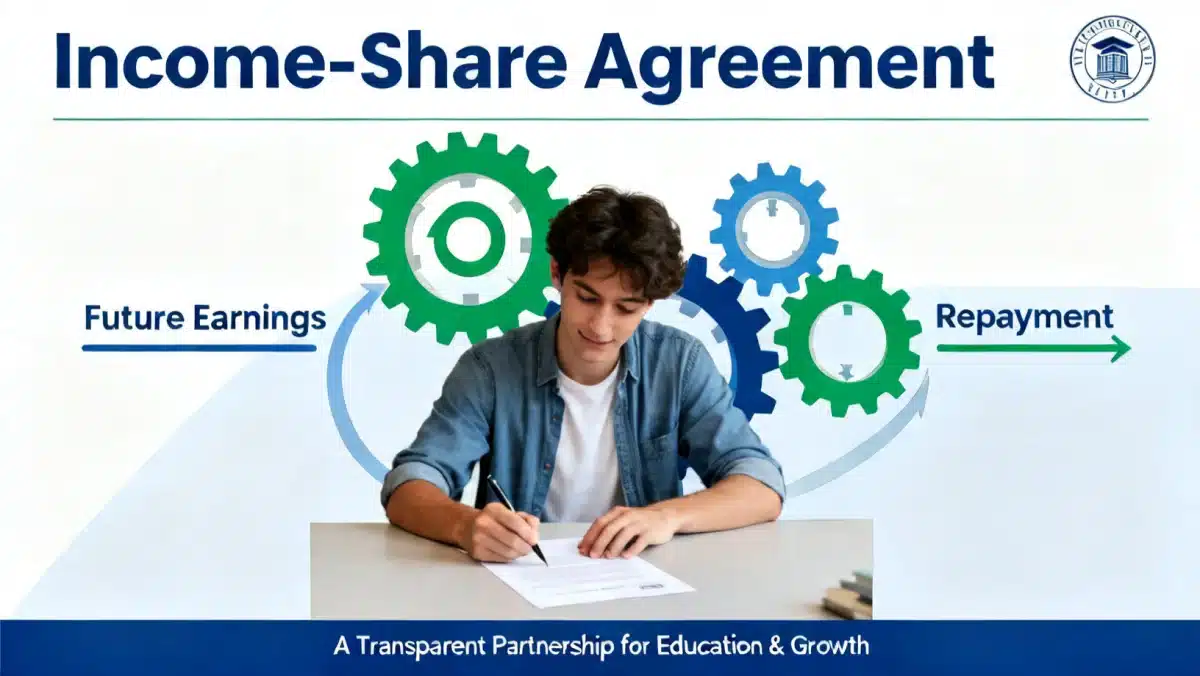
One of the most talked-about innovative models gaining traction is the Income-Share Agreement (ISA). Unlike traditional loans, ISAs do not involve a fixed repayment schedule or interest rate. Instead, students agree to pay back a fixed percentage of their future income for a set number of years after graduation, typically only if their earnings reach a predetermined threshold. This model aligns the university’s success with the student’s post-graduation financial success, creating a shared incentive for positive outcomes.
Proponents of ISAs argue that they reduce the upfront financial risk for students, especially those pursuing degrees in fields with uncertain job prospects or lower starting salaries. If a graduate earns less than the agreed-upon minimum income, their repayment obligation is paused or reduced. This safety net can be particularly appealing to students from lower-income backgrounds who might otherwise be deterred by the prospect of accumulating significant debt.
How ISAs work in practice
Universities offering ISAs typically partner with external financing companies or manage their own ISA funds. The terms of an ISA can vary widely, but common elements include the percentage of income to be repaid, the duration of the repayment period, and an income threshold below which no payments are required. Some ISAs also include a payment cap, ensuring students do not pay back an exorbitant amount, even if their income skyrockets.
- Students receive funding for tuition and living expenses.
- Repayment begins only after earning above a specified income threshold.
- Payments are a percentage of monthly income, adjusting with earnings.
- A maximum repayment cap limits the total amount paid back.
While ISAs offer significant advantages in terms of flexibility and risk mitigation, they also face scrutiny. Critics raise concerns about the potential for higher overall costs for high-earning graduates compared to traditional loans, and the complexity of comparing different ISA terms. Regulatory frameworks are still evolving to ensure fairness and transparency for students engaging in these agreements.
In summary, Income-Share Agreements represent a significant shift in how higher education can be financed, moving away from fixed debt obligations towards a more flexible, income-contingent model. This innovation holds the potential to unlock access for many students who are risk-averse or lack traditional collateral, fostering a more equitable educational landscape.
Competency-based education: valuing skills over seat time
Competency-Based Education (CBE) is another transformative model gaining traction in US universities, particularly as a solution to college affordability. Instead of focusing on credit hours and ‘seat time,’ CBE programs emphasize the mastery of specific skills and knowledge. Students progress at their own pace, demonstrating proficiency in competencies rather than completing a set number of courses within a predefined semester schedule. This approach can significantly reduce the time and cost associated with obtaining a degree.
For students who already possess prior knowledge or work experience, CBE allows them to accelerate their learning by testing out of competencies they have already mastered. This can translate into fewer required courses and, consequently, lower tuition costs. It also caters to adult learners and working professionals who need flexible educational pathways that fit around their existing commitments.
The structure of CBE programs
CBE programs are often self-paced, allowing students to move through modules as quickly as they can demonstrate mastery. Assessment methods typically include projects, portfolios, and examinations that directly measure a student’s ability to apply specific skills. Faculty members act more as mentors and facilitators, guiding students through their learning journey rather than delivering traditional lectures.
- Focus on demonstrated mastery of skills, not credit hours.
- Students can accelerate learning based on prior knowledge.
- Tuition is often charged per competency or subscription-based, not per credit.
- Flexible scheduling accommodates working adults and diverse learners.
The financial benefits of CBE are substantial. By reducing the time to degree completion, students incur less tuition and fewer living expenses. Some institutions offer subscription-based tuition models, where students pay a flat fee for a certain period, regardless of how many competencies they complete, further incentivizing rapid progress. This direct link between demonstrated skill and academic progress makes CBE a highly efficient and cost-effective option.
In conclusion, Competency-Based Education offers a compelling alternative to traditional higher education, prioritizing demonstrated skills and flexible learning paths. Its inherent efficiency and potential for reduced costs make it a powerful tool in the arsenal against rising college expenses, particularly for students seeking direct pathways to career readiness.
Micro-credentialing and stackable degrees: modular learning
The third innovative model emerging to address college affordability by 2025 involves the proliferation of micro-credentials and stackable degrees. This approach breaks down traditional degree programs into smaller, more manageable, and often more affordable units. Micro-credentials, such as badges, certificates, or nanodegrees, certify specific skills or competencies that are immediately applicable in the workforce. These can then be ‘stacked’ together to eventually form a full associate’s or bachelor’s degree.
This modular approach offers several advantages. Students can invest in smaller, more affordable educational segments, gaining valuable skills and credentials that can lead to employment or career advancement even before completing a full degree. This partial investment allows them to earn money and gain experience, which can then be used to fund further education, making the overall journey more financially sustainable.
Benefits of modular learning pathways
Micro-credentials are often developed in close collaboration with industry partners, ensuring that the skills taught are directly relevant to current workforce demands. This industry alignment enhances the employability of graduates and provides a clear return on investment. Furthermore, the ability to ‘stack’ these credentials provides a flexible pathway for lifelong learning, allowing individuals to continuously update their skills without committing to a full, multi-year degree program all at once.
- Offers focused, job-specific skill development.
- Lower upfront cost compared to full degree programs.
- Credentials can be earned quickly, leading to faster career entry.
- Provides flexible pathways to accumulate credits towards a full degree.
The financial impact of micro-credentialing is significant. By allowing students to earn and learn simultaneously, it mitigates the opportunity cost of full-time enrollment and reduces the overall financial burden. It also enables employers to invest in upskilling their existing workforce by funding specific micro-credentials, rather than requiring employees to pursue expensive, lengthy degree programs.
Ultimately, micro-credentialing and stackable degrees are democratizing access to specialized knowledge and skill development. They offer a more agile, affordable, and career-focused alternative to traditional degrees, empowering students to build their educational journey incrementally and align it directly with their professional goals.
Hybrid learning models and technology integration
Beyond financial structures and curriculum design, technological advancements are playing a pivotal role in enhancing college affordability. Hybrid learning models, which combine online instruction with in-person experiences, offer greater flexibility and can reduce costs associated with campus infrastructure and student commutes. The strategic integration of technology allows universities to deliver high-quality education to a wider audience more efficiently.
Online learning platforms, virtual reality simulations, and AI-powered tutoring systems can personalize learning experiences and provide resources that reduce the need for expensive textbooks or extensive one-on-one faculty time. These technological tools are not just about convenience; they are about optimizing resource allocation and creating scalable educational solutions that can lower the per-student cost of delivery without compromising quality.
Leveraging digital resources for cost savings
Many institutions are exploring open educational resources (OER) as alternatives to costly textbooks, significantly reducing material expenses for students. Digital libraries and online databases provide extensive academic resources that are often included in tuition or available at minimal cost. The shift towards digital content also supports more dynamic and up-to-date curricula, benefiting both students and faculty.
- Reduced need for physical campus infrastructure.
- Access to open educational resources (OER) saves textbook costs.
- Flexible scheduling accommodates diverse student needs.
- Scalable learning platforms can reach more students efficiently.
Furthermore, technology can facilitate more efficient administrative processes, from admissions to student support services, leading to operational savings that can indirectly contribute to affordability. The data analytics capabilities of modern learning platforms also allow institutions to identify areas for improvement and optimize educational delivery, ensuring that resources are used effectively to support student success.
In conclusion, the thoughtful integration of hybrid learning models and advanced technology is not merely a convenience but a strategic imperative for future college affordability. These innovations enable universities to expand access, personalize learning, and reduce operational costs, ultimately making higher education more attainable for a broader demographic.
Public-private partnerships and institutional innovation
To further bolster college affordability, US universities are increasingly forging public-private partnerships. These collaborations often involve businesses, non-profit organizations, and government agencies working together to provide funding, resources, and expertise. Such partnerships can lead to the creation of specialized programs, internships, and scholarships that directly address workforce needs while also alleviating the financial burden on students.
For example, a tech company might partner with a university to fund a data science program, offering scholarships to students and guaranteeing internships. This not only provides students with invaluable experience and financial support but also ensures a pipeline of skilled talent for the company. These symbiotic relationships are crucial for creating sustainable models of affordable education that benefit all stakeholders.
Examples of successful collaborations
Several universities have already demonstrated the power of these partnerships. Community colleges, in particular, have a strong track record of collaborating with local industries to develop vocational programs that lead directly to employment. These programs often come with lower tuition rates and provide clear pathways to high-demand jobs, making them highly attractive and affordable options for technical and vocational training.
- Industry-funded scholarships and grants for specific programs.
- Joint research initiatives that provide student employment opportunities.
- Apprenticeships and internships integrated into academic curricula.
- Shared resources and facilities reduce institutional overhead.
Beyond direct funding, partnerships can also involve sharing infrastructure, research facilities, or even faculty expertise, thereby reducing the operational costs for educational institutions. This collaborative ecosystem fosters an environment of innovation, allowing universities to experiment with new models and scale successful initiatives more rapidly than they could on their own.
In conclusion, public-private partnerships are becoming an indispensable component of the strategy to enhance college affordability. By pooling resources and expertise, these collaborations create more pathways for students to access high-quality, relevant education that is financially sustainable and directly aligned with career opportunities.
The imperative for systemic change and future outlook
Addressing college affordability in 2025 demands more than just incremental adjustments; it requires systemic change across the entire higher education landscape. The innovative models discussed—Income-Share Agreements, Competency-Based Education, and Micro-credentialing—represent significant steps towards this transformation. However, their widespread adoption and effectiveness will depend on several factors, including regulatory support, institutional willingness to adapt, and continued public discourse.
The push for affordability is not solely about reducing costs; it is also about increasing the perceived and actual value of a college degree. As the job market evolves, universities must ensure that their programs equip students with the skills and knowledge necessary to thrive, providing a clear return on their educational investment. This value proposition is central to attracting and retaining students in an increasingly competitive environment.
Challenges and opportunities ahead
Implementing these innovative models on a large scale will undoubtedly present challenges, from overcoming institutional inertia to navigating complex accreditation processes. However, the opportunities for positive impact are immense. A more affordable and accessible higher education system can foster greater social mobility, drive economic growth, and ensure that the US remains a leader in innovation and human capital development.
- Overcoming resistance to change within traditional academic structures.
- Developing robust assessment methods for competency-based programs.
- Ensuring equitable access to technology and online resources.
- Establishing clear regulatory frameworks for novel financial models like ISAs.
The future of college affordability will likely involve a blend of these innovative models, tailored to the unique needs of different institutions and student populations. The conversation will continue to shift from simply ‘how much does college cost?’ to ‘what value does this education provide, and how can it be financed equitably?’ This focus on value and accessibility will redefine higher education for generations to come.
In conclusion, the journey to a more affordable higher education system is ongoing and complex, but the emerging innovative models offer a hopeful glimpse into the future. By embracing change, fostering collaboration, and prioritizing student success, US universities can build a system that is both excellent and accessible to all.
| Key Model | Brief Description |
|---|---|
| Income-Share Agreements (ISAs) | Students repay a percentage of future income, reducing upfront risk and aligning university success with student earnings. |
| Competency-Based Education (CBE) | Focuses on skill mastery over seat time, allowing accelerated learning and potentially lower costs for quicker degree completion. |
| Micro-credentialing & Stackable Degrees | Modular learning units for specific skills, offering affordable, flexible pathways to career advancement and full degrees. |
| Hybrid Learning & Technology | Combines online and in-person education, leveraging digital tools to reduce costs and enhance learning flexibility. |
Frequently asked questions about college affordability
An ISA is a financing model where students agree to pay a percentage of their future income for a set period after graduation, typically only if their earnings exceed a certain threshold. It differs from traditional loans by not having a fixed interest rate or repayment amount, aligning repayment with income.
CBE reduces costs by allowing students to progress based on demonstrated skill mastery rather than fixed credit hours. This means students with prior knowledge can finish their degrees faster, incurring less tuition and fewer living expenses, and often benefit from flexible, subscription-based tuition models.
Micro-credentials are small, focused certifications for specific skills. They enhance affordability by offering lower-cost, shorter-term educational units that can lead to immediate employment or be ‘stacked’ into full degrees, allowing students to earn and learn simultaneously.
Hybrid learning, combining online and in-person instruction, is likely to become more standard. It offers flexibility, reduces campus infrastructure costs, and leverages technology to deliver education efficiently, thereby contributing to overall affordability and accessibility for a wider range of students.
Public-private partnerships positively impact college costs by providing additional funding, resources, and scholarships through collaborations with businesses and government. These partnerships can create specialized, affordable programs aligned with workforce needs, reducing financial burdens on students and institutions.
Conclusion
The pursuit of higher education in the United States is at a pivotal juncture, with escalating costs demanding innovative and sustainable solutions. The models of Income-Share Agreements, Competency-Based Education, and Micro-credentialing represent not just minor adjustments but fundamental shifts in how universities approach funding, curriculum delivery, and student success. Coupled with technological integration and strategic public-private partnerships, these innovations are paving the way for a future where college education is not only excellent but also genuinely accessible and affordable for a broader spectrum of students. As 2025 approaches, the continued evolution and adoption of these groundbreaking approaches will be critical in shaping a more equitable and prosperous educational landscape.