Commuter Benefits 2025: Save 30% on Daily Travel
The latest commuter benefits 2025 present a crucial opportunity for employees to significantly reduce daily travel costs by up to 30% through pre-tax deductions for public transit, qualified parking, and vanpooling.
Are you looking for smart ways to cut down on daily expenses? For many Americans, the daily commute represents a significant financial burden. Fortunately, the landscape of commuter benefits 2025 offers an exciting opportunity to alleviate this strain, potentially saving you up to 30% on your daily travel costs. Understanding these benefits is not just about saving money; it’s about optimizing your financial well-being and making your journey to work more affordable and efficient.
Understanding Commuter Benefits: The Foundation of Savings
Commuter benefits are employer-provided programs that allow employees to use pre-tax dollars to pay for qualified commuting expenses. This means that money allocated to these benefits is deducted from your paycheck before taxes are calculated, effectively reducing your taxable income. The result is a significant saving on federal, state, and local income taxes, as well as FICA taxes (Social Security and Medicare).
In essence, these benefits act as a financial buffer against the rising costs of transportation. By leveraging pre-tax dollars, employees can make their hard-earned money go further, directly impacting their take-home pay. The foundational principle is simple yet powerful: spend less on your commute, keep more in your pocket.
How Pre-Tax Deductions Work
The core mechanism of commuter benefits lies in their pre-tax nature. When you elect to participate in a commuter benefit program, a portion of your salary is set aside for transportation expenses before any federal, state, or local income taxes, or FICA taxes, are applied. This reduces your overall taxable income, leading to a lower tax bill.
- Reduced Taxable Income: The primary advantage is a direct reduction in the amount of income subject to taxation.
- Automatic Savings: Savings are realized automatically with each paycheck, without needing to file complex forms.
- Increased Take-Home Pay: Despite the deduction, the tax savings often result in a net increase in disposable income.
Understanding these fundamental aspects is the first step toward unlocking the full potential of commuter benefits 2025 and making your daily travel more economical. The system is designed to be straightforward, ensuring that employees can easily enroll and begin saving without unnecessary complications.
New Regulations and Expanded Opportunities for 2025
As we approach 2025, it’s crucial to stay informed about any new regulations or changes that might impact commuter benefits. While the core structure often remains consistent, there can be adjustments to monthly limits, eligible expenses, or administrative guidelines. These updates are designed to reflect current economic conditions and evolving transportation trends.
For 2025, experts anticipate potential increases in the monthly pre-tax limits for both transit and parking benefits. These adjustments are typically made to keep pace with inflation and the rising costs of public transportation and parking services. Staying current with these figures is essential for maximizing your savings.
Anticipated Monthly Limits
The IRS sets annual limits on the amount of pre-tax dollars employees can allocate to commuter benefits. These limits are usually announced late in the preceding year. For 2025, while official figures are pending, projections suggest an increase from previous years, reflecting the ongoing economic landscape.
- Transit Benefits: Expected to see an increase, covering expenses like bus, subway, train, and ferry fares.
- Qualified Parking: Also projected to increase, applicable to parking at or near your workplace or a public transit stop.
- Vanpooling: Often falls under transit benefits, covering costs for certified vanpools.
These anticipated increases mean that employees will have more room to save pre-tax dollars, making commuter benefits 2025 even more attractive. Employers should also prepare to update their benefit programs to reflect these new limits, ensuring their workforce can take full advantage of the expanded opportunities.
Eligible Expenses: What Qualifies for Savings?
To fully leverage commuter benefits 2025, it’s vital to understand what types of expenses qualify for pre-tax deductions. The IRS meticulously defines these categories to ensure compliance and prevent misuse. Generally, eligible expenses fall into three main areas: public transit, qualified parking, and vanpooling.
These categories are designed to support a wide range of commuting options, encouraging employees to utilize more sustainable and cost-effective modes of transport. Knowing what qualifies allows you to plan your commute strategically and maximize your pre-tax savings effectively.
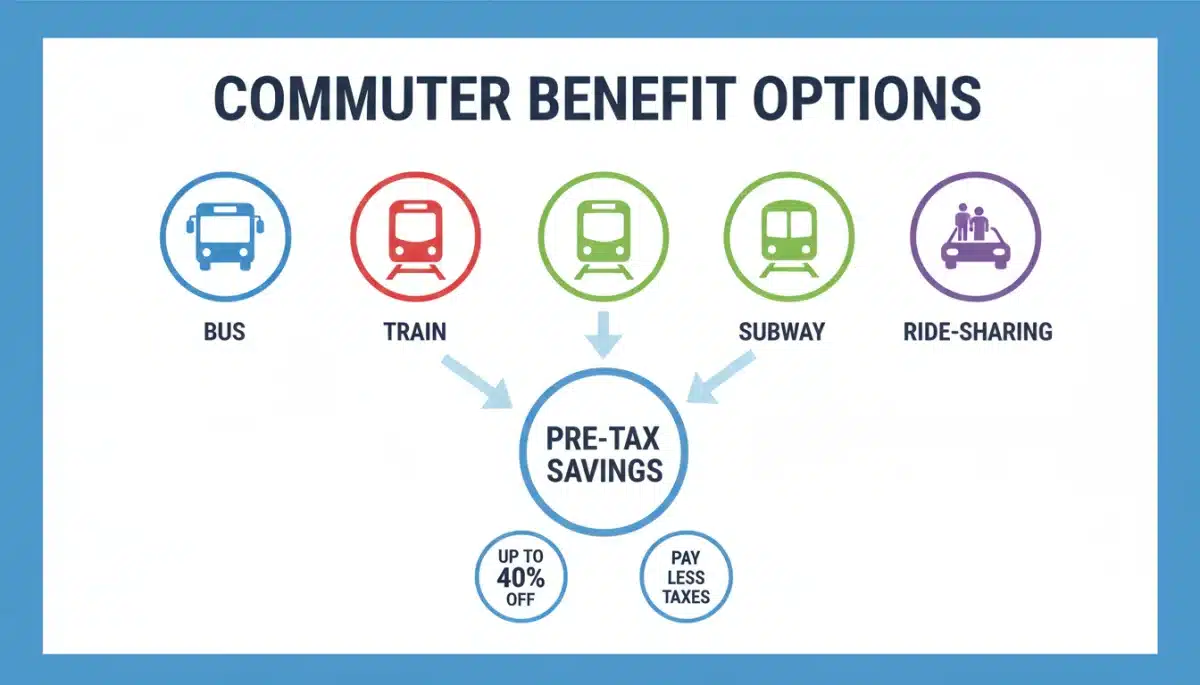

Public Transit and Vanpooling
Public transit benefits cover a broad spectrum of services used for commuting to and from work. This includes tickets, passes, tokens, and fare cards for buses, subways, trains, streetcars, and even ferries. The key is that these services must be provided by a public or private entity that operates on a regular, continuing basis.
- Bus Fares: Any form of public bus transportation qualifies.
- Subway and Train Passes: Monthly or annual passes for rail services.
- Ferry Services: Commuter ferry tickets are also eligible.
- Vanpooling: Payments for a vehicle with a seating capacity of at least six adults, primarily used for commuting, with at least half the seating capacity used by employees.
Vanpooling is an often-underutilized benefit that can provide significant savings for groups of employees commuting together. It promotes ridesharing, reducing traffic congestion and environmental impact while also offering financial advantages.
Maximizing Your Savings: Strategies for Employees
Saving up to 30% on your daily travel in 2025 is an achievable goal, but it requires a proactive approach. Beyond simply enrolling in a commuter benefits program, there are several strategies employees can employ to maximize their savings. These strategies revolve around understanding your commuting habits, planning your expenses, and staying informed.
One of the most effective ways to maximize savings is to accurately estimate your monthly commuting costs. Overestimating can lead to funds being tied up in your benefit account, while underestimating means you might miss out on potential pre-tax savings. A careful assessment of your typical travel expenses is critical.
Smart Planning and Enrollment
Begin by calculating your average monthly expenses for public transit, parking, or vanpooling. Consider all recurring costs, such as monthly passes, daily parking fees, or vanpool contributions. Once you have a clear picture, you can set your pre-tax deduction amount accordingly.
- Accurate Estimation: Review past travel expenses to project future costs.
- Timely Enrollment: Enroll in your employer’s program as soon as possible to start saving immediately.
- Adjust as Needed: Most programs allow adjustments to your election amount periodically, so modify it if your commuting costs change.
Another smart strategy is to explore all available options. If you typically drive, consider if public transit or a vanpool could be a viable alternative, especially if your employer offers robust benefits for those options. Sometimes a small change in habit can lead to substantial financial gains through commuter benefits 2025.
Employer Perspectives: Benefits of Offering Commuter Programs
While commuter benefits 2025 primarily benefit employees, employers also stand to gain significantly by offering these programs. Beyond fostering a positive work environment, providing commuter benefits can lead to tangible financial advantages for businesses and contribute to a more engaged and satisfied workforce.
From an employer’s standpoint, offering commuter benefits is a strategic investment in their employees’ well-being and the company’s bottom line. It’s a win-win situation where both parties experience measurable advantages, making it an attractive component of a comprehensive benefits package.
Attracting and Retaining Talent
In today’s competitive job market, a robust benefits package is a key differentiator. Commuter benefits can significantly enhance an employer’s appeal, helping to attract top talent and improve employee retention. Employees value benefits that directly impact their daily lives and financial health.
- Enhanced Recruitment: A comprehensive benefits package, including commuter options, makes a company more attractive to prospective employees.
- Improved Retention: Employees who feel supported by their employer are more likely to stay with the company long-term.
- Boosted Morale: Reducing financial stress related to commuting can lead to happier, more productive employees.
Furthermore, employers often realize payroll tax savings. Since the money employees set aside for commuter benefits is pre-tax, it reduces the employer’s payroll tax liability (FICA taxes). This direct financial benefit, coupled with the enhanced employee satisfaction, makes offering commuter benefits a smart business decision for any organization looking toward 2025.
The Future of Commuting: Trends and Innovations
The landscape of commuting is constantly evolving, driven by technological advancements, environmental concerns, and changing work patterns. Looking ahead to 2025 and beyond, several trends and innovations are poised to reshape how we travel to work, potentially influencing the scope and design of commuter benefits 2025 programs.
Sustainable transportation solutions are gaining increasing prominence, with a growing emphasis on reducing carbon footprints. This shift is likely to encourage the adoption of electric vehicles, bike-sharing programs, and enhanced public transit networks, all of which could integrate into future commuter benefit offerings.
Technological Integration and Flexibility
Technology will play a crucial role in making commutes more efficient and adaptable. Mobile apps for ticketing, real-time transit tracking, and integrated payment systems are already common, but future innovations could include personalized route optimization and seamless multimodal transport options.
- Smart Ticketing: Integration with digital wallets and smart devices for effortless travel payments.
- Ride-Sharing Integration: Potential for pre-tax benefits to extend to qualified ride-sharing services, further expanding options.
- Flexible Work Models: Hybrid work schedules may necessitate more flexible commuter benefit programs that adapt to varying office attendance.
These trends suggest that future commuter benefits will need to be increasingly flexible and technologically integrated to meet the diverse needs of the modern workforce. The goal will remain the same: to make daily travel as convenient, affordable, and sustainable as possible, ensuring that commuter benefits 2025 continue to be a valuable asset for employees.
| Key Aspect | Brief Description |
|---|---|
| Pre-Tax Savings | Reduce taxable income by paying for commuting costs with pre-tax dollars, saving up to 30%. |
| Eligible Expenses | Covers public transit (bus, train, subway) and qualified parking; vanpooling also included. |
| 2025 Updates | Anticipated increases in monthly pre-tax limits to keep pace with inflation and transportation costs. |
| Employer Benefits | Attracts talent, improves retention, boosts morale, and offers payroll tax savings for businesses. |
Frequently Asked Questions About Commuter Benefits 2025
Commuter benefits allow employees to pay for eligible commuting expenses with pre-tax dollars. This reduces your taxable income, lowering the amount you pay in federal, state, and FICA taxes, effectively saving you up to 30% on your transportation costs.
For 2025, eligible expenses typically include public transit costs (bus, subway, train, ferry fares) and qualified parking fees. Vanpooling costs for certified vehicles also qualify, encouraging shared rides and environmental benefits.
While official figures are usually released late in the preceding year, it is anticipated that monthly pre-tax limits for both transit and parking benefits will see an increase in 2025, keeping pace with inflation and rising transportation costs.
Enroll through your employer’s HR or benefits department. To maximize savings, accurately estimate your monthly commuting costs and elect the appropriate pre-tax deduction amount. Review and adjust your election periodically as your costs change.
Employers benefit from offering commuter programs by attracting and retaining talent, boosting employee morale, and realizing payroll tax savings. It’s a valuable component of a competitive benefits package that supports both employees and the company’s financial health.
Conclusion
The opportunity to save up to 30% on your daily travel in 2025 through commuter benefits is a significant advantage for employees across the United States. By understanding the mechanisms of pre-tax deductions, staying informed about new regulations, and strategically utilizing eligible expenses, individuals can substantially reduce their commuting costs. These programs not only offer direct financial relief but also contribute to a more efficient and sustainable approach to daily travel. For both employees seeking to enhance their financial well-being and employers aiming to foster a supportive and attractive work environment, embracing the full potential of commuter benefits in 2025 is a clear path forward.