Real Estate Market Forecast 2025: 7% ROI Investment Opportunities

The 2025 real estate market is poised for strategic growth, offering promising investment opportunities with a projected 7% ROI. Understanding key economic drivers and emerging sectors is crucial for maximizing returns.
Are you looking to strategically position your investments for significant returns? The real estate market forecast 2025 presents a compelling landscape for investors, with a promising projected 7% return on investment (ROI). This isn’t just about buying property; it’s about understanding the intricate forces shaping future values and identifying where smart money will flow. Let’s delve into what 2025 holds for real estate.
Understanding the 2025 Real Estate Landscape
The year 2025 is anticipated to bring a more stable and predictable real estate market, following the volatility of previous years. Economic indicators suggest a period of thoughtful growth, where informed decisions will be paramount for successful investing. This section explores the overarching trends defining this new environment.
Several macroeconomic factors are converging to shape the market. Interest rates, inflation, and employment figures all play a critical role in dictating buyer affordability and investor confidence. A nuanced understanding of these elements is essential for anyone looking to capitalize on upcoming opportunities.
Key Economic Drivers Influencing 2025
Interest rates are expected to stabilize, potentially offering more favorable borrowing conditions for both residential and commercial ventures. This stability can unlock demand that has been pent up, leading to increased transaction volumes. Furthermore, controlled inflation will help maintain purchasing power.
- Interest Rate Stabilization: Predictable borrowing costs enhance investment planning.
- Controlled Inflation: Preserves capital value and supports economic growth.
- Strong Employment: Boosts consumer confidence and housing demand.
- Wage Growth: Increases affordability for potential homebuyers and renters.
The interplay of these factors creates a foundation for a robust market. Investors who monitor these indicators closely will be better equipped to identify prime entry and exit points. The overall economic health of the United States remains a strong determinant of real estate performance.
In conclusion, the 2025 real estate market will be largely influenced by stabilizing economic conditions. Understanding the implications of interest rate trends, inflation control, and employment growth provides a crucial starting point for any investor aiming for a 7% ROI.
Identifying High-Growth Sectors for Investment
Pinpointing the specific sectors within real estate that are poised for significant growth is key to achieving a 7% projected ROI in 2025. Not all property types will perform equally, and a strategic focus on emerging and resilient categories is vital. We will examine which areas show the most promise.
From residential to industrial, each sector has unique drivers and potential. Demographic shifts, technological advancements, and evolving consumer behaviors are all contributing to the varying attractiveness of different property types. Smart investors will align their portfolios with these shifts.
Residential Real Estate: Suburban and Multifamily
Suburban residential properties continue to attract strong demand, driven by remote work trends and the desire for more space. Multifamily units, especially those catering to young professionals and growing families, also present attractive opportunities due to ongoing housing shortages.
The rental market remains robust, providing consistent income streams. Investors should look for properties in areas with strong job growth and good school districts, as these factors consistently drive demand. The single-family rental market is also gaining traction, offering a blend of stability and potential appreciation.
Commercial and Industrial Opportunities
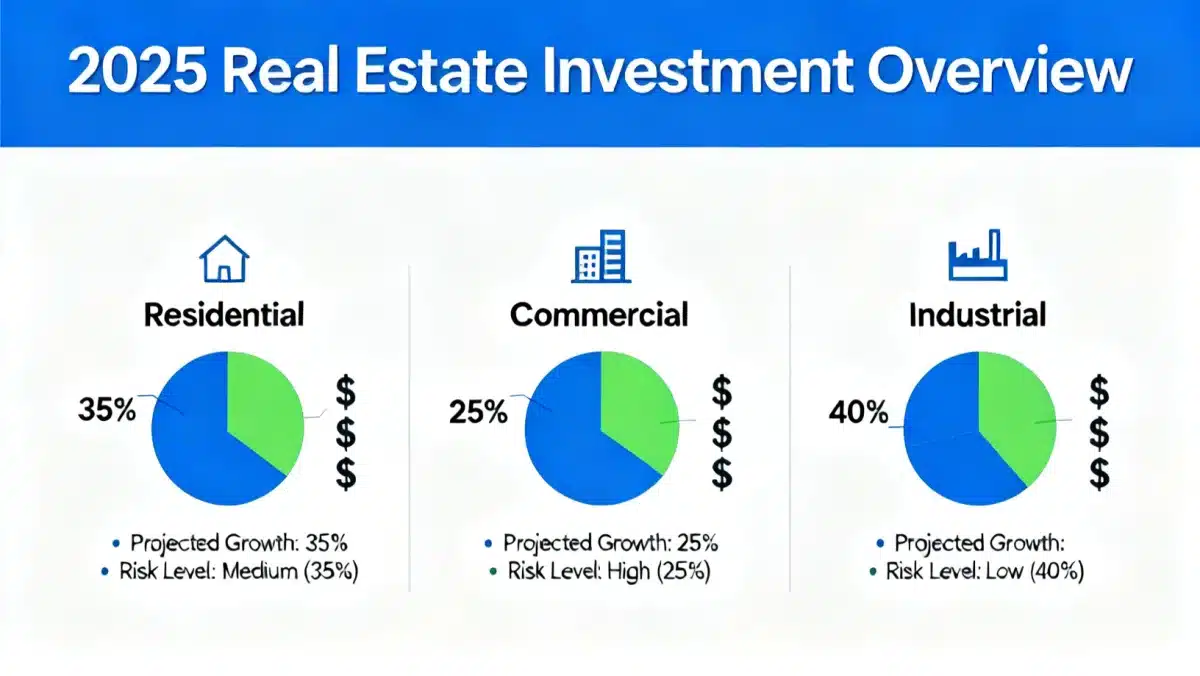
While traditional office spaces face ongoing challenges, industrial properties, particularly logistics and warehousing, are booming due to the e-commerce surge. Data centers also represent a high-growth niche, fueled by the ever-increasing demand for digital infrastructure.
- Logistics and Warehousing: Essential for e-commerce fulfillment and supply chain resilience.
- Data Centers: High demand driven by cloud computing and AI.
- Specialized Retail: Niche retail experiences that cannot be replicated online.
- Healthcare Facilities: Consistent demand due to an aging population and medical advancements.
Understanding these sector-specific dynamics allows investors to make targeted decisions. The shift from traditional brick-and-mortar to online commerce, for instance, has fundamentally reshaped the demand for certain commercial properties.
To summarize, the 2025 market favors specific sectors like suburban residential, multifamily, industrial logistics, and data centers. Focusing on these high-growth areas significantly increases the likelihood of achieving a 7% ROI by leveraging current economic and social trends.
Geographic Hotbeds for Real Estate Investment
Locating the right geographic markets is as crucial as identifying the right property type for successful real estate investment in 2025. Certain regions across the United States are projected to outperform others, offering more fertile ground for a 7% ROI. This section highlights these promising areas.
Factors such as population growth, job creation, infrastructure development, and favorable business climates contribute to a region’s investment appeal. Smart investors will conduct thorough due diligence on local market conditions to ensure their chosen locations align with growth projections.
Emerging Markets with Strong Fundamentals
Cities in the Sun Belt continue to show robust growth, attracting both residents and businesses. States like Florida, Texas, and Arizona benefit from favorable tax policies, warm climates, and a lower cost of living compared to coastal metros. These factors drive sustained demand for housing and commercial spaces.
Midwestern cities experiencing revitalization and technological investment also present undervalued opportunities. These areas often offer higher cap rates and greater potential for appreciation as their economies diversify and attract new industries. Secondary and tertiary markets are often overlooked but can yield impressive returns.
Infrastructure and Development Projects
Regions benefiting from significant government or private infrastructure investments are prime candidates for appreciation. New transportation hubs, expanded utilities, and large-scale development projects create jobs and enhance property values in surrounding areas. Proximity to major universities or research institutions can also be a strong indicator of future growth.
- Sun Belt States: Continuous population and job growth.
- Tech Hubs: Innovation-driven economies attracting high-income earners.
- Revitalized Midwestern Cities: Undervalued markets with strong growth potential.
- Infrastructure-Rich Regions: Areas with new roads, public transit, and development.
Investing in these geographic hotbeds requires a forward-looking perspective. Understanding where people and businesses are moving, and why, is fundamental to making sound investment choices. Local market knowledge becomes an invaluable asset.
In essence, identifying geographic hotbeds with strong economic fundamentals and ongoing development projects is critical. Focusing on regions like the Sun Belt or revitalized Midwestern cities can significantly enhance the probability of achieving the targeted 7% ROI in 2025.
Strategic Approaches to Maximize Your ROI
Achieving a 7% projected ROI in the 2025 real estate market requires more than just identifying promising properties; it demands strategic investment approaches. This section outlines effective methodologies that investors can employ to optimize their returns and mitigate risks. A proactive and informed strategy is key.
From leveraging financing options to understanding market cycles, every decision impacts the overall profitability of an investment. Diversification, careful due diligence, and a long-term perspective are all components of a successful strategy. It’s about working smarter, not just harder.
Leveraging Financing and Partnerships
Creative financing solutions can significantly enhance ROI by reducing upfront capital requirements and improving cash flow. Exploring options like syndicated investments, crowdfunding, or forming partnerships with other investors can open doors to larger, more lucrative projects.
Understanding different loan products and their terms is also crucial. Fixed-rate mortgages offer stability, while adjustable-rate mortgages might be suitable for short-term holds. Always consult with financial advisors to tailor a financing strategy to your specific goals and risk tolerance.
Due Diligence and Risk Mitigation
Thorough due diligence is non-negotiable. This involves in-depth market research, property inspections, financial analysis, and understanding local zoning laws. Identifying potential risks early allows for proactive mitigation, protecting your investment from unexpected setbacks.
- Comprehensive Market Research: Analyze local demographics, economic trends, and competitor properties.
- Property Condition Assessment: Professional inspections to uncover hidden issues.
- Financial Projections: Realistic cash flow and appreciation estimates.
- Legal and Regulatory Review: Understanding zoning, permits, and environmental factors.
Diversifying your portfolio across different property types and geographic locations can also spread risk. Avoid putting all your eggs in one basket, as market fluctuations can impact individual assets differently. A balanced portfolio is a resilient portfolio.
In conclusion, maximizing your ROI in 2025 involves strategic financing, robust due diligence, and effective risk mitigation. By employing these approaches, investors can navigate the market with confidence and increase their chances of achieving a 7% return.
Navigating Potential Challenges and Risks
While the 2025 real estate market presents promising opportunities for a 7% projected ROI, it is not without its challenges and risks. Astute investors must be aware of potential pitfalls and develop strategies to navigate them effectively. A realistic outlook is essential for sustained success.
Market volatility, economic downturns, and unforeseen regulatory changes can all impact investment performance. Understanding these potential hurdles allows for better preparedness and more resilient investment strategies. Proactive risk management is a cornerstone of smart investing.
Economic Headwinds and Market Corrections
Despite positive forecasts, global economic shifts or domestic policy changes could introduce unexpected headwinds. A sudden rise in interest rates, for example, could cool demand and impact property values. Investors should monitor economic indicators closely and be prepared to adjust their strategies.
While a major market correction is not widely anticipated for 2025, localized downturns are always a possibility. Over-reliance on a single market or property type can amplify these risks. Diversification remains a powerful tool against broad market fluctuations.
Regulatory Changes and Environmental Factors
New zoning laws, environmental regulations, or changes in property taxes can significantly affect investment profitability. Staying informed about local and federal policy developments is crucial. Adapting to these changes quickly can turn potential threats into opportunities.
- Interest Rate Hikes: Can impact affordability and borrowing costs.
- Inflationary Pressures: May erode purchasing power and increase operational costs.
- Geopolitical Events: Can create economic uncertainty and impact global supply chains.
- Local Policy Changes: New zoning or tax laws affecting property values.
Environmental factors, such as climate change impacts and rising insurance costs in vulnerable areas, also pose increasing risks. Investors should consider these long-term trends when evaluating property locations and potential liabilities. Sustainable investments may also become more attractive.
To conclude, navigating the 2025 real estate market effectively means acknowledging and preparing for potential challenges. By understanding economic headwinds, regulatory shifts, and environmental factors, investors can implement robust risk mitigation strategies to safeguard their projected 7% ROI.
Long-Term Outlook and Sustained Growth
Beyond the immediate 2025 forecast, understanding the long-term outlook for the real estate market is vital for sustained growth and wealth creation. A 7% projected ROI in the coming year is a significant milestone, but enduring success depends on a vision extending far into the future. This section explores factors contributing to long-term market health.
Demographic shifts, technological innovations, and evolving urban planning will continue to reshape the real estate landscape. Investors who align their strategies with these fundamental, enduring trends will be best positioned for sustained profitability over decades, not just years.
Demographic Shifts and Urbanization
Population growth, particularly in key urban and suburban centers, will continue to drive demand for housing and commercial spaces. The ongoing trend of urbanization, coupled with the increasing diversity of households, necessitates a variety of housing options, from compact city apartments to larger suburban homes.
The aging population also creates specific demands for accessible housing and healthcare facilities. Understanding these demographic nuances allows investors to target properties that will remain relevant and desirable for decades to come, ensuring long-term rental income and appreciation.
Technological Advancements and Sustainability
Technology continues to revolutionize real estate, from smart home features to advanced property management systems. Investments in properties that embrace these innovations can offer a competitive edge and attract a wider tenant base. Energy-efficient buildings and sustainable practices are also becoming increasingly important.
- Smart Home Integration: Enhances property appeal and efficiency.
- Sustainable Building Practices: Reduces operational costs and attracts environmentally conscious tenants.
- PropTech Solutions: Streamlines property management and investment analysis.
- Remote Work Infrastructure: Increases demand for well-equipped home offices and flexible workspaces.
The focus on sustainability is not merely an ethical choice; it’s a financial one. Properties with lower carbon footprints often command higher rents and better resale values due to reduced utility costs and growing consumer preference. This trend is only expected to accelerate.
In conclusion, achieving sustained real estate growth beyond 2025 hinges on adapting to long-term demographic shifts and embracing technological and sustainable innovations. Investors who integrate these forward-thinking perspectives into their strategies are set for enduring success and continued attractive returns.
The Role of Data and Analytics in 2025 Investments
In the increasingly complex real estate market of 2025, data and analytics are no longer optional tools; they are indispensable for identifying investment opportunities and achieving a 7% projected ROI. Leveraging powerful data insights can provide a significant competitive advantage. This section explores how data can inform and optimize your investment decisions.
From predicting market trends to assessing individual property performance, data-driven approaches minimize guesswork and maximize precision. Investors who embrace advanced analytics will be better equipped to make informed choices, mitigate risks, and uncover hidden value.
Predictive Analytics and Market Forecasting
Predictive analytics uses historical data, machine learning algorithms, and statistical modeling to forecast future market movements. This allows investors to anticipate shifts in demand, supply, and pricing, providing a crucial edge in timing their investments. Tools that can accurately project rental income and property appreciation are invaluable.
These analytics can also identify micro-market trends that might be overlooked by traditional methods. Understanding the unique dynamics of specific neighborhoods or property sub-types can lead to more targeted and profitable investment decisions, avoiding broad-brush assumptions.
Performance Metrics and Due Diligence
Beyond market trends, data analytics are critical for assessing the performance of individual properties and portfolios. Key performance indicators (KPIs) such as cap rates, cash-on-cash returns, and occupancy rates can be tracked and analyzed in real-time, allowing for timely adjustments to investment strategies.
- Market Trend Prediction: Anticipate shifts in supply, demand, and pricing.
- Property Valuation Models: More accurate and objective property assessments.
- Risk Assessment Tools: Identify and quantify potential investment risks.
- Portfolio Optimization: Balance assets for maximum returns and diversified risk.
Robust data platforms also streamline the due diligence process, providing comprehensive reports on property history, environmental factors, and demographic profiles. This level of detail ensures that investment decisions are based on solid evidence, rather than intuition or speculation.
To conclude, the judicious use of data and analytics will be a defining characteristic of successful real estate investment in 2025. By integrating predictive models and performance metrics into their strategies, investors can enhance their decision-making and significantly improve their chances of achieving a 7% ROI.
| Key Investment Area | Brief Description for 2025 |
|---|---|
| High-Growth Sectors | Focus on suburban residential, multifamily, industrial logistics, and data centers for strong returns. |
| Geographic Hotbeds | Prioritize Sun Belt states and revitalized Midwestern cities with strong economic fundamentals. |
| Strategic Approaches | Utilize creative financing, thorough due diligence, and portfolio diversification to maximize ROI. |
| Data & Analytics | Employ predictive analytics and performance metrics for informed, data-driven investment decisions. |
Frequently Asked Questions About 2025 Real Estate Investments
The real estate market forecast for 2025 indicates a promising projected return on investment (ROI) of around 7%. This figure is supported by stabilizing economic conditions, controlled inflation, and strong employment growth, creating a favorable environment for strategic investors across various property types and geographic regions.
For 2025, high-growth sectors include suburban residential properties, multifamily units, industrial logistics, and data centers. These areas are driven by ongoing trends such as remote work, e-commerce expansion, and increasing demand for digital infrastructure. Investors should focus on these segments for optimal returns.
The Sun Belt states, known for their population and job growth, continue to be strong contenders. Additionally, revitalized Midwestern cities showing economic diversification and new infrastructure projects present compelling, often undervalued, opportunities. Thorough local market research is crucial for identifying specific promising areas.
Risk mitigation involves comprehensive due diligence, including market research, property inspections, and financial analysis. Diversifying portfolios across different property types and locations is also key. Staying informed about economic indicators and potential regulatory changes allows for proactive adjustments and protection of investments.
The long-term outlook remains positive, driven by sustained demographic shifts, ongoing urbanization, and technological advancements. Investing in properties that align with these enduring trends, such as sustainable and tech-integrated buildings, will ensure continued relevance and sustained growth, fostering long-term wealth creation.
Conclusion
The real estate market forecast 2025 paints a picture of strategic opportunity for investors seeking a 7% projected ROI. By understanding the underlying economic drivers, identifying high-growth sectors and geographic hotbeds, and employing strategic investment approaches, individuals can confidently navigate this evolving landscape. While challenges and risks are inherent, a data-driven approach coupled with a long-term perspective will be key to sustained success. The future of real estate is bright for those prepared to make informed and proactive decisions.