2025 Wellness Programs: Boost Health, Cut Costs by 15%

New wellness program benefits for 2025 are poised to revolutionize corporate health strategies, offering a proven pathway to improve employee well-being while simultaneously achieving a remarkable 15% reduction in associated healthcare costs.
As organizations look to the future, understanding the profound impact of 2025 wellness program benefits becomes crucial for both employee well-being and fiscal responsibility. These forward-thinking initiatives are designed not just to enhance health but also to drive significant cost reductions, making them an indispensable part of modern business strategy.
The Strategic Imperative of Wellness Programs in 2025
The landscape of employee benefits is continuously evolving, with a growing emphasis on holistic well-being. By 2025, robust wellness programs are no longer a perk but a strategic imperative for companies aiming to foster a thriving workforce and manage escalating healthcare expenditures. These programs acknowledge that a healthy employee is a productive employee, and investing in their well-being yields substantial returns.
Forward-thinking organizations are recognizing that traditional reactive healthcare models are unsustainable. Instead, a proactive approach through comprehensive wellness initiatives can prevent illnesses, encourage healthier lifestyles, and ultimately reduce the need for costly medical interventions. This shift represents a fundamental rethinking of how employers support their most valuable asset: their people.
Beyond Basic Health: A Holistic Approach
The focus of 2025 wellness programs extends far beyond physical health to encompass mental, emotional, and financial well-being. This integrated approach ensures that employees receive support across all facets of their lives, leading to more resilient and engaged individuals.
- Physical Health Initiatives: Includes fitness challenges, nutrition counseling, and preventive screenings.
- Mental Health Support: Offers access to therapy, stress management workshops, and mindfulness resources.
- Financial Wellness Education: Provides guidance on budgeting, debt management, and retirement planning.
- Social Connection Programs: Fosters team-building activities and community engagement to combat isolation.
By addressing these diverse dimensions of well-being, companies can create a supportive environment where employees feel valued and empowered to take charge of their health. This comprehensive care not only improves individual lives but also cultivates a more positive and productive workplace culture, directly contributing to the anticipated 15% cost reduction.
Quantifiable Benefits: Reducing Healthcare Costs by 15%
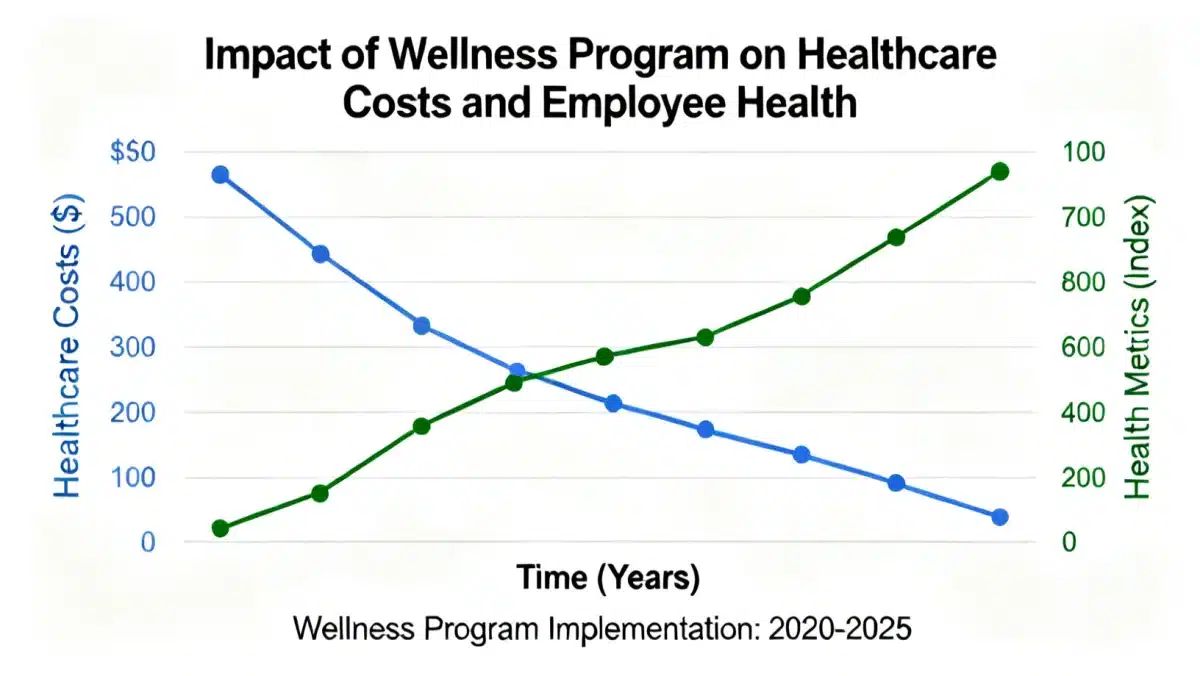
One of the most compelling aspects of the new wellness program benefits for 2025 is their proven ability to significantly curb healthcare expenditures. Data consistently demonstrates that well-designed and actively utilized wellness programs lead to a measurable decrease in medical claims, prescription costs, and absenteeism, ultimately translating into substantial financial savings for employers.
Achieving a 15% reduction in healthcare costs is an ambitious yet attainable goal for organizations committed to implementing effective wellness strategies. This reduction is not merely theoretical; it is a direct outcome of fewer chronic disease diagnoses, improved management of existing conditions, and a general uplift in employee health status. The ripple effect extends to lower insurance premiums and reduced workers’ compensation claims.
Mechanisms of Cost Reduction
Several key mechanisms contribute to the impressive cost savings associated with these programs. Understanding these drivers helps organizations tailor their initiatives for maximum impact and ensure their investment yields the desired financial returns.
- Preventive Care Emphasis: Encouraging regular check-ups and screenings catches potential health issues early, preventing costly advanced treatments.
- Chronic Disease Management: Programs that support employees with chronic conditions (e.g., diabetes, hypertension) help manage symptoms, reduce complications, and decrease emergency room visits.
- Improved Lifestyle Choices: Promoting healthy eating, regular exercise, and smoking cessation directly lowers the risk of lifestyle-related diseases, a major driver of healthcare costs.
- Reduced Absenteeism and Presenteeism: Healthier employees take fewer sick days and are more productive when at work, minimizing productivity losses.
The cumulative effect of these initiatives creates a healthier workforce, which naturally requires less intensive and expensive medical care. This translates directly into the projected 15% cost savings, making wellness programs a sound financial decision for any forward-looking company.
Key Features of Advanced 2025 Wellness Programs
The evolution of wellness programs continues with technology and personalized approaches at the forefront. The 2025 iteration of these benefits will incorporate advanced features designed to maximize engagement, tailor interventions, and deliver measurable outcomes. These programs move beyond one-size-fits-all solutions to offer dynamic, responsive support for individual employee needs.
Integration with existing HR systems and health platforms will be seamless, providing a unified experience for employees and streamlined data for employers. This sophistication ensures that wellness initiatives are not isolated efforts but an integral part of the overall employee experience, demonstrating a strong commitment to their health and well-being.
Personalized Health Journeys and Digital Tools
Personalization is a cornerstone of effective wellness. Modern programs leverage data and technology to create bespoke health journeys for each employee, recognizing that individual needs and goals vary significantly.
- AI-Powered Coaching: Utilizing artificial intelligence to provide personalized health recommendations, fitness plans, and dietary advice.
- Wearable Device Integration: Connecting with smartwatches and fitness trackers to monitor activity levels, sleep patterns, and heart rate, offering real-time feedback.
- Gamification and Incentives: Incorporating challenges, rewards, and team competitions to boost engagement and motivate healthy behaviors.
- Telehealth and Virtual Care: Providing convenient access to medical professionals, mental health counselors, and nutritionists through online platforms.
These advanced features make wellness more accessible, engaging, and effective for employees, driving higher participation rates and better health outcomes. The convenience and tailored support offered by these digital tools are crucial for achieving the ambitious health improvement and cost reduction targets set for 2025.
Implementation Strategies for Maximum Impact
Successfully launching and sustaining a wellness program that delivers the promised 2025 wellness program benefits, including a 15% cost reduction, requires careful planning and strategic execution. It’s not enough to simply offer programs; organizations must ensure they are effectively communicated, easily accessible, and genuinely embraced by the workforce. A top-down commitment combined with strong employee engagement is paramount.
Creating a culture of health within the organization is key. This involves leadership buy-in, continuous communication, and the allocation of sufficient resources to support the initiatives. Without these foundational elements, even the most innovative programs may struggle to achieve their full potential.
Building a Culture of Wellness
A successful wellness program transcends mere offerings; it integrates health and well-being into the very fabric of the company culture. This means actively promoting healthy choices and providing a supportive environment.
- Leadership Advocacy: Senior management actively participates in and champions wellness initiatives, setting an example for employees.
- Employee Feedback Mechanisms: Regularly soliciting input from employees to tailor programs to their specific needs and preferences.
- Dedicated Wellness Committees: Establishing groups of employees passionate about health to help organize and promote activities.
- Flexible Work Arrangements: Supporting work-life balance through flexible schedules and remote work options, reducing stress.
By fostering an environment where wellness is prioritized and celebrated, organizations can significantly enhance participation and commitment to the programs. This cultural integration is a critical factor in realizing both the health improvements and the significant cost savings targeted for 2025.
Measuring Success: Metrics and ROI in 2025
To truly understand the impact of new wellness program benefits for 2025, robust measurement and evaluation strategies are essential. Organizations need clear metrics to track progress, identify areas for improvement, and demonstrate the return on investment (ROI) to stakeholders. This data-driven approach ensures accountability and continuous optimization of wellness initiatives.
Measuring success goes beyond simple participation rates; it delves into health outcomes, cost savings, and employee satisfaction. By meticulously analyzing these factors, companies can prove the tangible value of their wellness investments and refine their strategies to achieve even greater results in the future.
Key Performance Indicators for Wellness Programs
A comprehensive set of KPIs allows organizations to holistically assess the effectiveness of their wellness programs. These indicators provide a clear picture of both employee health improvements and financial benefits.
- Healthcare Claims Data: Tracking changes in medical expenditures, prescription costs, and emergency room visits.
- Biometric Screenings: Monitoring improvements in key health indicators such as blood pressure, cholesterol, and blood glucose levels.
- Absenteeism and Presenteeism Rates: Measuring reductions in sick days taken and increases in on-the-job productivity.
- Employee Engagement and Satisfaction Surveys: Gauging employee perceptions of the program and their overall well-being.
- Turnover Rates: Observing any correlation between wellness program participation and employee retention.
By consistently collecting and analyzing this data, organizations can clearly demonstrate how their 2025 wellness program benefits are contributing to a healthier workforce and achieving the targeted 15% reduction in healthcare costs. This evidence-based approach reinforces the value of wellness as a core business strategy.
The Future Workplace: Healthier Employees, Stronger Bottom Line
Looking ahead to 2025 and beyond, the integration of comprehensive wellness programs will define the most successful workplaces. The focus will shift even further towards preventative health and holistic well-being, recognizing that an investment in employee health is an investment in the company’s long-term sustainability and prosperity. The new wellness program benefits for 2025 are not just a trend; they are a fundamental evolution in how businesses operate.
Organizations that embrace these advanced wellness strategies will not only enjoy significant financial advantages through reduced healthcare costs but also cultivate a more vibrant, engaged, and resilient workforce. This creates a powerful competitive edge, attracting top talent and fostering a positive reputation as an employer of choice.
Preparing for a Healthier Tomorrow
Companies must proactively adapt to these changes to remain competitive and ensure their employees thrive. This involves continuous innovation and a commitment to employee well-being as a core value.
- Continuous Program Evolution: Regularly updating and refining wellness offerings based on new research, employee feedback, and emerging health trends.
- Integration with Company Values: Aligning wellness initiatives with the overall mission and values of the organization to create a cohesive message.
- Technology Adoption: Staying abreast of new digital tools and platforms that can enhance program delivery and engagement.
- Global Perspective: For multinational companies, adapting wellness programs to meet the diverse cultural and health needs of a global workforce.
By prioritizing the health and happiness of their employees, businesses are not only improving individual lives but also securing a stronger financial future. The 2025 wellness program benefits offer a clear roadmap to achieving both a healthier workforce and a more robust bottom line, proving that caring for people is indeed good business.
| Key Program Area | Benefit Description |
|---|---|
| Holistic Health | Addresses physical, mental, emotional, and financial well-being for comprehensive employee support. |
| Cost Reduction | Aims for a 15% decrease in healthcare costs through preventive care and improved health. |
| Personalized Engagement | Utilizes AI, wearables, and gamification for tailored health journeys and increased participation. |
| Strategic Implementation | Requires leadership buy-in and a strong culture of wellness for maximum impact and ROI. |
Frequently Asked Questions About 2025 Wellness Programs
The main goals are to significantly improve employee health and well-being across physical, mental, and financial dimensions, while simultaneously achieving a substantial reduction in organizational healthcare costs, targeting a 15% decrease.
Cost reduction is achieved through a focus on preventive care, effective chronic disease management, promotion of healthier lifestyle choices, and reductions in absenteeism and presenteeism, all contributing to fewer medical claims.
Advanced programs will feature AI-powered coaching, seamless wearable device integration, gamification, incentives, and expanded telehealth options for personalized and engaging employee health journeys.
A strong culture of wellness, driven by leadership advocacy and employee involvement, is crucial. It ensures high participation, fosters a supportive environment, and integrates health into the company’s core values, maximizing program impact.
ROI will be measured through various KPIs, including changes in healthcare claims, biometric screening results, absenteeism rates, employee engagement surveys, and their direct correlation with overall financial performance and retention.
Conclusion
The evolving landscape of employee well-being underscores the critical importance of the new wellness program benefits for 2025. These comprehensive initiatives offer a powerful dual advantage: significantly enhancing employee health and satisfaction while delivering a projected 15% reduction in healthcare costs. By embracing holistic approaches, leveraging advanced technology, and fostering a culture of wellness, organizations can build a resilient, productive workforce and secure a stronger financial future. Investing in employee health is no longer an optional perk but a strategic imperative that yields profound benefits for both individuals and the bottom line.