Early Childhood Education: 5 Key Initiatives for US States in 2025
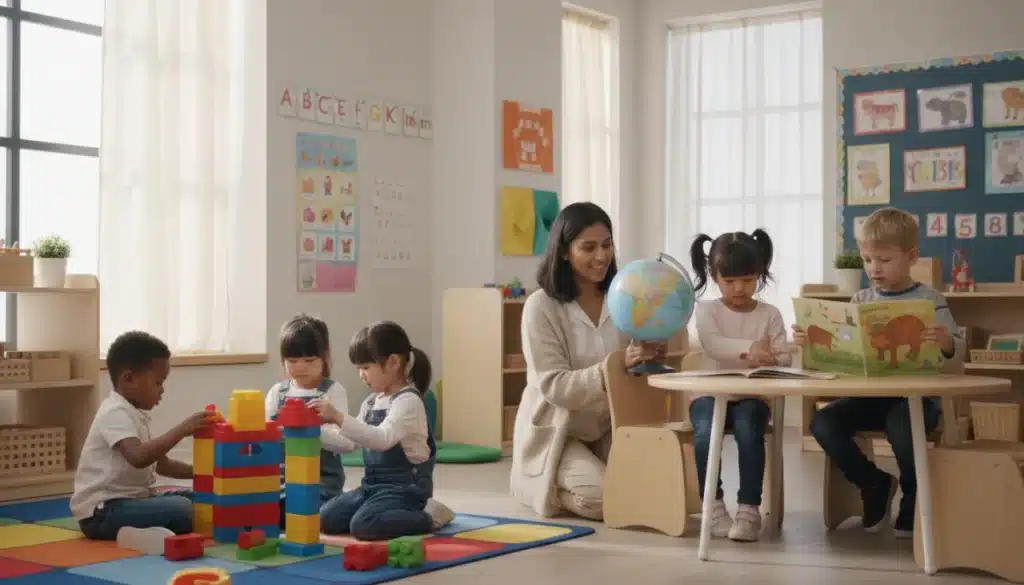
US states are set to implement five crucial initiatives in 2025 to bolster early childhood education, focusing on expanding access, improving program quality, supporting the educator workforce, integrating comprehensive services, and fostering stronger family involvement.
The landscape of early learning is constantly evolving, and for 2025, US states are poised to make significant strides. Understanding the upcoming trends and policy shifts is crucial for educators, policymakers, and parents alike. This article explores five pivotal initiatives designed to transform and strengthen early childhood education initiatives across the nation.
Expanding Access to High-Quality Preschool Programs
One of the most pressing challenges in early childhood education remains ensuring equitable access to high-quality preschool for all children. Many states are recognizing the long-term benefits of early learning experiences, from improved academic outcomes to enhanced social-emotional development. Consequently, a major focus for 2025 is on broadening the reach of these crucial programs.
States are exploring various funding mechanisms and policy changes to make preschool more universally available. This often involves a mix of state-funded initiatives, partnerships with community-based organizations, and expanded eligibility criteria to include more families. The goal is to dismantle barriers that currently prevent many children from accessing these foundational learning environments.
Universal Preschool Expansion
Several states are moving towards a model of universal preschool, aiming to provide free, high-quality early learning opportunities to all 3- and 4-year-olds, regardless of family income. This ambitious undertaking requires substantial investment and strategic planning, but the potential returns in terms of child development and societal benefits are immense.
- Increased state appropriations for early learning.
- Development of new preschool facilities and classrooms.
- Collaboration with Head Start and private providers to expand capacity.
- Streamlined enrollment processes for families.
The expansion efforts are not just about increasing the number of seats; they are fundamentally about ensuring that the programs offered meet rigorous quality standards. Without a focus on quality, simply increasing access may not yield the desired developmental benefits for children. Therefore, states are coupling access initiatives with robust quality improvement measures.
This commitment to expanding access reflects a growing understanding that early education is not a luxury but a fundamental right and a critical investment in a state’s future workforce and citizenry. By making preschool more accessible, states hope to level the playing field for children from diverse backgrounds, providing them with a strong start.
Enhancing Program Quality and Curriculum Standards
Beyond simply expanding access, states are deeply committed to elevating the quality of early childhood education programs. High-quality programs are characterized by well-trained educators, developmentally appropriate curricula, safe and stimulating environments, and strong family engagement. For 2025, there’s a concerted effort to standardize and improve these elements across the board.
This initiative involves a multi-pronged approach, from establishing clear curriculum guidelines to implementing robust quality rating and improvement systems (QRIS). The aim is to ensure that every child, regardless of where they attend preschool, receives an education that prepares them for kindergarten and beyond.
Implementing Quality Rating and Improvement Systems (QRIS)
QRIS are state-led systems that define, measure, and improve the quality of early care and education programs. These systems provide a framework for programs to assess their quality and receive support for continuous improvement. States are refining their QRIS to be more effective and user-friendly.
- Clearer benchmarks for program quality and teacher qualifications.
- Increased technical assistance and coaching for early learning providers.
- Public reporting of QRIS ratings to inform parental choice.
- Financial incentives for programs achieving higher quality ratings.
The development of standardized, evidence-based curricula is another critical component. These curricula are designed to promote holistic child development, encompassing cognitive, social, emotional, and physical domains. States are investing in resources and training to help educators effectively implement these new or revised standards.
Ultimately, enhancing program quality is about creating optimal learning environments where young children can thrive. This requires ongoing evaluation, adaptation, and a commitment to continuous improvement, ensuring that programs are responsive to the evolving needs of children and families.
Investing in the Early Childhood Educator Workforce
The quality of early childhood education is inextricably linked to the quality of its workforce. Attracting, retaining, and adequately compensating skilled early childhood educators is a significant challenge. For 2025, states are focusing on initiatives to professionalize the field, improve compensation, and provide ongoing professional development opportunities.
Addressing the workforce crisis requires a comprehensive strategy that tackles issues of low pay, limited benefits, and lack of professional recognition. States are exploring innovative solutions to make early childhood education a more attractive and sustainable career path.
Professional Development and Credentialing Pathways
Providing accessible and relevant professional development is key to equipping educators with the latest research and best practices in child development. States are investing in training programs, scholarships, and credentialing pathways that support educators in advancing their skills and qualifications.
- Expanded access to higher education and specialized early childhood degrees.
- Development of competency-based training modules.
- Mentorship programs for new and aspiring educators.
- Recognition and financial incentives for advanced credentials.
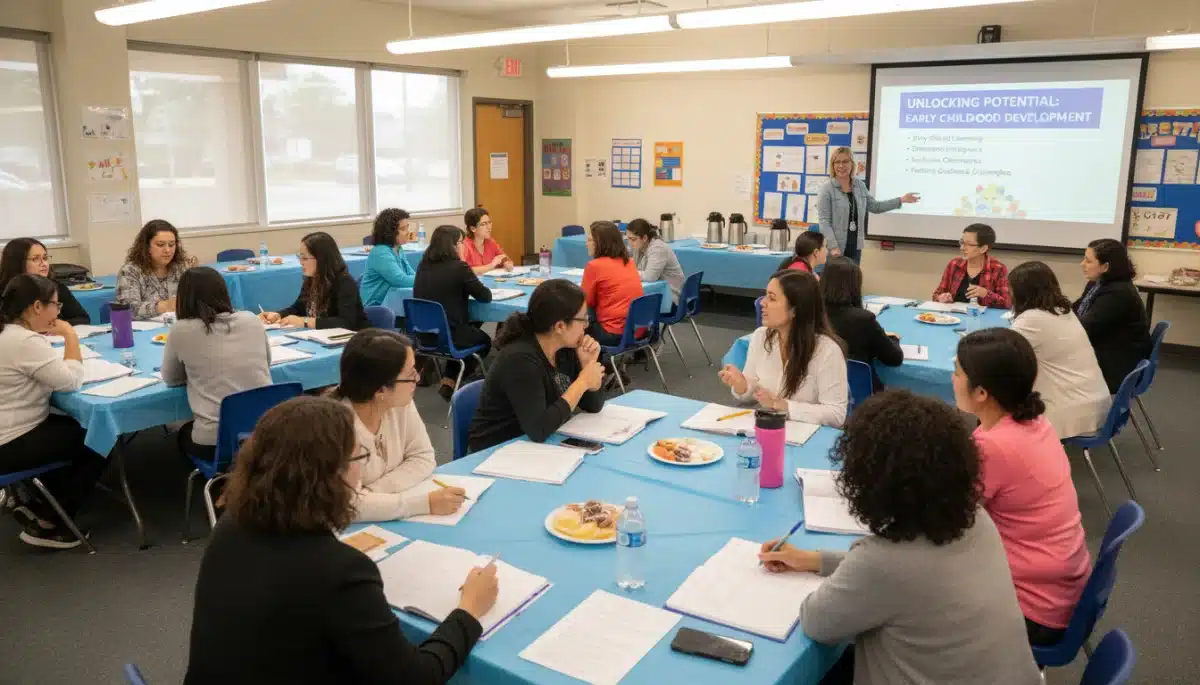
Improving compensation is perhaps the most critical aspect of strengthening the workforce. Many early childhood educators earn wages significantly lower than their K-12 counterparts, despite requiring similar levels of education and expertise. States are looking at various models to increase salaries and benefits, including direct subsidies, tiered reimbursement rates, and advocating for increased federal funding.
A strong, well-supported early childhood workforce is the backbone of any effective early learning system. By prioritizing investments in these dedicated professionals, states are investing directly in the future success and well-being of their youngest citizens.
Integrating Health, Mental Health, and Developmental Services
Recognizing that a child’s development is holistic, states are increasingly emphasizing the integration of health, mental health, and developmental services within early childhood education settings. This initiative aims to provide comprehensive support for children and families, addressing needs beyond academic learning.
Early identification of developmental delays or health issues can significantly impact a child’s long-term outcomes. By embedding these services directly into preschool programs or establishing strong referral pathways, states can ensure that children receive timely and appropriate interventions.
Early Identification and Intervention Programs
Many states are developing or expanding programs that facilitate early screening and intervention. This includes integrating developmental screenings into routine check-ups and early learning environments, making it easier to identify and address potential concerns.
- Partnerships between early learning centers and healthcare providers.
- On-site mental health consultants for children and staff.
- Referral systems for speech therapy, occupational therapy, and other specialized services.
- Parent education on developmental milestones and warning signs.
The focus on mental health support for young children is particularly gaining traction. Understanding that early experiences shape brain development and emotional regulation, states are providing resources for educators to support children’s social-emotional well-being and for families to access mental health services when needed.
This integrated approach acknowledges that children do not learn in isolation. Their physical and emotional health directly impacts their ability to engage in learning. By creating a comprehensive support system, states are working to ensure that every child has the best possible foundation for healthy development.
Strengthening Family Engagement and Support Systems
Families are a child’s first and most influential teachers. Effective early childhood education initiatives recognize and leverage the critical role of families, fostering strong partnerships between homes and early learning programs. For 2025, states are prioritizing strategies to enhance family engagement and provide robust support systems.
This goes beyond simple parent-teacher conferences; it involves creating genuine partnerships where families feel valued, informed, and empowered to contribute to their child’s learning and development. States are exploring various avenues to build these essential connections.
Parent Education and Resource Programs
Many states are investing in programs that provide parents with resources, information, and skills to support their child’s development at home. These can range from workshops on early literacy to parenting skills classes and access to community resources.
- Home visiting programs for new parents.
- Workshops on child development and positive parenting strategies.
- Access to literacy resources and family learning activities.
- Support groups and peer networks for parents.
Digital tools and communication platforms are also playing an increasing role in facilitating family engagement. States are encouraging early learning programs to utilize technology to share updates, resources, and communicate effectively with parents, ensuring they remain active participants in their child’s educational journey.
By strengthening family engagement, states are not only supporting individual children but also building stronger, more resilient communities. When families are empowered and connected, children benefit from a more consistent and supportive learning environment, both at home and in their early care settings.
Data-Driven Policy Making and Continuous Improvement
Effective policy development in early childhood education relies heavily on robust data collection and analysis. For 2025, states are committed to enhancing their data infrastructure to inform decision-making, track progress, and ensure accountability for their early childhood initiatives. This involves moving beyond anecdotal evidence to a system grounded in measurable outcomes.
The goal is to create a feedback loop where data gathered from programs, children, and families directly influences policy adjustments and resource allocation. This iterative process ensures that initiatives remain relevant, effective, and responsive to the needs of the population they serve.
Developing Integrated Data Systems
Many states are working to build or improve integrated early childhood data systems that can connect information across various sectors, including education, health, and social services. These systems provide a more holistic view of children’s experiences and outcomes.
- Standardized data collection methods across early learning programs.
- Secure data sharing agreements between different state agencies.
- Tools for analyzing program effectiveness and child progress.
- Public dashboards showcasing key early childhood indicators.
Furthermore, states are emphasizing the importance of longitudinal data tracking, following cohorts of children from preschool through elementary school and beyond. This allows policymakers to understand the long-term impact of early childhood interventions and adjust strategies as needed to maximize positive outcomes.
A commitment to data-driven decision-making ensures that resources are allocated efficiently and effectively, leading to sustained improvements in early childhood education. It transforms policy from a speculative endeavor into a strategic investment, guided by evidence and focused on measurable results for children and families.
| Key Initiative | Brief Description |
|---|---|
| Expanded Access | Increasing availability of high-quality preschool for all children. |
| Quality Enhancement | Improving program standards and curriculum through QRIS. |
| Workforce Investment | Professionalizing educators, increasing compensation, and training. |
| Integrated Services | Connecting health, mental health, and developmental support with education. |
Frequently Asked Questions About Early Childhood Education Initiatives
The main goal is to ensure that all children, especially those from underserved communities, have equitable opportunities to attend high-quality preschool programs. This aims to foster early development, reduce achievement gaps, and prepare children for future academic success.
QRIS provide a structured framework for programs to assess their quality, identify areas for improvement, and access resources for professional development. They also help parents make informed choices by offering transparent quality ratings.
A well-qualified and adequately compensated workforce is fundamental to delivering high-quality early education. Investing in educators improves program quality, reduces turnover, and ensures children receive consistent, expert care and instruction.
It means embedding services like developmental screenings, mental health support, and referrals for specialized therapies directly into early learning settings. This holistic approach addresses all aspects of a child’s well-being, supporting their overall development and learning readiness.
Families can engage by actively participating in parent education programs, communicating regularly with educators, utilizing available resources, and advocating for policies that support early learning. Strong family-program partnerships are vital for a child’s success.
Conclusion
The five key initiatives for early childhood education in US states for 2025 represent a significant and coordinated effort to build a stronger foundation for the nation’s youngest learners. By focusing on expanding access, enhancing quality, investing in the workforce, integrating comprehensive services, and strengthening family engagement, states are demonstrating a clear commitment to fostering optimal child development. These strategic investments promise not only to improve individual outcomes for children but also to yield substantial long-term benefits for society as a whole, underscoring the profound impact of quality early learning experiences.