Fed Rate Outlook 2025: Mortgage & Savings Impact
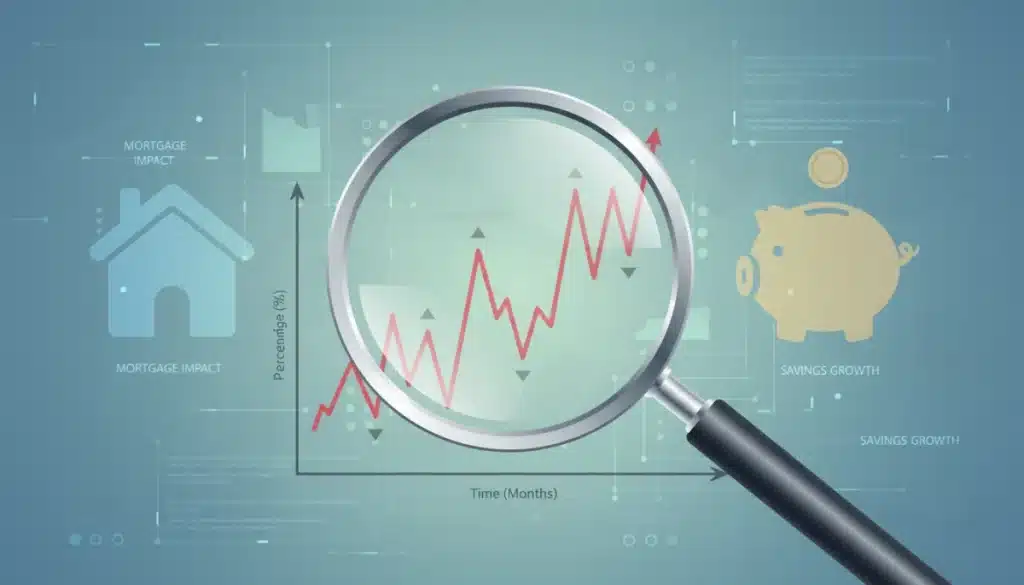
A 0.25% shift in the 2025 Federal Reserve interest rate outlook can significantly alter mortgage payments for homeowners and the earning potential of savings accounts for consumers across the U.S.
Understanding the future trajectory of interest rates is not just for economists; it’s a critical component of personal financial planning. The 2025 Federal Reserve Interest Rate Outlook: How a 0.25% Shift Impacts Your Mortgage and Savings directly influences the cost of borrowing and the returns on your investments. For millions of Americans, even a slight adjustment by the Federal Reserve can have tangible effects on their daily finances, shaping decisions from buying a home to planning for retirement. This article will delve into what a potential 0.25% shift could mean for you.
Understanding the Federal Reserve’s Role in Interest Rates
The Federal Reserve, often simply called ‘the Fed,’ serves as the central bank of the United States. Its primary mandate is to foster maximum employment, stable prices, and moderate long-term interest rates. To achieve these goals, the Fed utilizes various monetary policy tools, with adjusting the federal funds rate being one of the most prominent.
The federal funds rate is the target interest rate set by the Federal Open Market Committee (FOMC) at which commercial banks borrow and lend their excess reserves to each other overnight. While not directly controlling consumer rates, changes to this target rate ripple throughout the financial system, influencing everything from credit card APRs to auto loan interest and, crucially, mortgage rates and savings yields.
How the Federal Funds Rate Influences the Economy
- Borrowing Costs: A higher federal funds rate generally translates to higher borrowing costs for banks, which in turn pass these costs onto consumers and businesses through increased loan rates.
- Inflation Control: Raising rates can slow down economic activity by making borrowing more expensive, thereby curbing inflation. Conversely, lowering rates stimulates the economy.
- Investment Decisions: Interest rate changes can affect the attractiveness of different investments, influencing capital flows and market behavior.
The Fed’s decisions are not made in a vacuum; they are based on careful analysis of economic data, including inflation reports, employment figures, and global economic conditions. Predicting the Fed’s next move requires a deep understanding of these complex factors and their potential interplay.
In essence, the Federal Reserve acts as the economic steward, guiding the nation’s financial health through the strategic manipulation of interest rates. Its decisions have far-reaching implications, extending from Wall Street to Main Street, directly affecting the financial well-being of every American.
The 2025 Federal Reserve Interest Rate Outlook: Key Factors
Forecasting interest rates for 2025 involves navigating a landscape filled with economic indicators and potential shifts. Several key factors will likely shape the Federal Reserve’s decisions regarding the federal funds rate, and understanding these can provide insight into the potential 2025 Federal Reserve interest rate outlook.
Inflation remains a paramount concern for the Fed. While it has shown signs of moderation, persistent inflationary pressures, especially in core services, could prompt the Fed to maintain higher rates for longer or even consider further increases. Conversely, a sustained decline in inflation towards the Fed’s 2% target would provide more leeway for rate cuts.
Economic Growth and Employment Trends
- GDP Growth: A robust economy with strong GDP growth might suggest that the economy can withstand higher interest rates, giving the Fed less urgency to cut.
- Labor Market Strength: A tight labor market, characterized by low unemployment and rising wages, can contribute to inflationary pressures. The Fed closely monitors these metrics for signs of overheating.
- Consumer Spending: Strong consumer spending, which accounts for a significant portion of economic activity, can also influence inflation and the Fed’s rate decisions.
Geopolitical events and global economic conditions also play a crucial role. International conflicts, supply chain disruptions, and economic slowdowns in major trading partners can all impact the U.S. economy and, consequently, the Fed’s policy choices. The interplay of these domestic and international forces makes the 2025 outlook particularly complex.
Ultimately, the Fed’s decisions are data-dependent, meaning they will react to the evolving economic landscape. While predictions offer guidance, the actual path of interest rates will be determined by how these various factors unfold over the coming months.
Impact on Mortgages: A 0.25% Shift Explained
For most homeowners and prospective buyers, mortgage rates are among the most significant financial considerations. A 0.25% shift in the federal funds rate, while seemingly small, can translate into hundreds or even thousands of dollars over the lifetime of a mortgage. This seemingly minor adjustment can significantly alter the affordability of housing and the financial burden on households.
When the Fed raises its target rate, it typically leads to an increase in the prime rate, which banks use as a benchmark for various loans, including adjustable-rate mortgages (ARMs) and home equity lines of credit (HELOCs). Fixed-rate mortgages, while not directly tied to the federal funds rate, are influenced by broader market conditions, including the yield on U.S. Treasury bonds, which tend to move in tandem with Fed policy expectations.
How a Rate Increase Affects Mortgage Payments
- Adjustable-Rate Mortgages (ARMs): Homeowners with ARMs will likely see their monthly payments increase as the rate adjusts upwards. This can lead to budget tightening for those on variable incomes or tight financial plans.
- New Fixed-Rate Mortgages: Prospective buyers will face higher interest rates for new fixed-rate mortgages, meaning higher monthly payments for the same loan amount. This can reduce buying power and make homeownership less accessible.
- Refinancing Opportunities: Higher rates make refinancing less attractive for existing homeowners, as they would likely secure a higher rate than their current one.
Conversely, a 0.25% rate cut would have the opposite effect, potentially lowering monthly payments for ARM holders and making new mortgages more affordable. This could stimulate the housing market, encouraging more buying and refinancing activity. Understanding these dynamics is crucial for anyone navigating the housing market in 2025.
The sensitivity of mortgage payments to even small rate changes underscores the importance of monitoring the Federal Reserve’s actions. For a 30-year fixed mortgage, a 0.25% difference can add up to a substantial sum over the loan’s duration, making careful financial planning essential.

Impact on Savings: What a 0.25% Shift Means for Your Funds
While higher interest rates can be a burden for borrowers, they often present a welcome opportunity for savers. A 0.25% shift in the Federal Reserve’s interest rate outlook can significantly impact the returns on various savings vehicles, from traditional savings accounts to certificates of deposit (CDs) and money market accounts. For individuals diligently building their emergency funds or saving for future goals, this shift can translate into tangible gains.
When the Fed raises its target rate, banks typically respond by increasing the interest rates they offer on deposit accounts. This is because the cost of borrowing for banks increases, and they need to attract more deposits to fund their lending activities. Consequently, consumers with savings accounts, particularly those in high-yield accounts, will likely see their earnings grow.
Opportunities for Savers with a Rate Increase
- Higher Yields on Savings Accounts: Traditional savings accounts and money market accounts will offer better annual percentage yields (APYs), allowing your money to grow faster with less effort.
- Attractive CD Rates: Certificates of Deposit (CDs) become more appealing as their fixed rates lock in higher returns for a specified period, providing predictable growth.
- Increased Income from Bonds: New issues of bonds, including U.S. Treasury bonds, will offer higher interest payments, making them more attractive to conservative investors.
Conversely, a 0.25% rate cut would lead to lower yields on savings accounts and CDs, reducing the earning potential of your deposited funds. This might encourage some savers to seek alternative investment opportunities with potentially higher, albeit riskier, returns. Therefore, understanding the Fed’s stance is crucial for optimizing your savings strategy.
For savers, staying informed about the 2025 Federal Reserve interest rate outlook is key to maximizing their financial growth. Adjusting your savings strategy to capitalize on favorable rate environments, such as opting for higher-yield accounts or longer-term CDs when rates are expected to rise, can significantly enhance your financial position.
Strategies for Navigating Rate Changes in 2025
Given the potential for a 0.25% shift in the Federal Reserve’s interest rate outlook for 2025, proactive financial planning becomes essential. Both borrowers and savers can implement strategies to mitigate risks and capitalize on opportunities presented by changing rate environments. Adaptability and informed decision-making are key to safeguarding and growing your finances.
For homeowners and those considering a mortgage, understanding your current loan terms is the first step. If you have an adjustable-rate mortgage (ARM), be prepared for potential payment adjustments. Exploring refinancing options might be prudent if rates are expected to fall, or if locking in a fixed rate now makes sense before potential increases. Prospective buyers should factor potential rate hikes into their affordability calculations.
Key Strategies for Borrowers
- Review Mortgage Terms: Understand your current interest rate and whether it’s fixed or adjustable.
- Consider Refinancing: If rates are low or expected to rise, consider refinancing to a fixed-rate mortgage.
- Pay Down Debt: Accelerating payments on variable-rate debts like credit cards or HELOCs can reduce exposure to rising interest costs.
For savers, the focus shifts to maximizing returns. As interest rates rise, high-yield savings accounts, money market accounts, and certificates of deposit (CDs) become more attractive. Diversifying your savings across different terms and types of accounts can help you balance liquidity with higher earnings. Regularly reviewing and adjusting your savings strategy is vital to keep pace with market changes.
Ultimately, a well-informed approach, combined with regular financial reviews, will enable you to navigate the 2025 interest rate landscape effectively. Consulting with a financial advisor can provide personalized guidance tailored to your specific circumstances and financial goals.
Beyond the 0.25% Shift: Long-Term Economic Implications
While a 0.25% shift in the Federal Reserve’s interest rate outlook is a significant near-term consideration, it’s also important to consider the broader, long-term economic implications of the Fed’s monetary policy. These decisions don’t just affect individual mortgages and savings accounts; they have ripple effects across the entire U.S. economy, influencing everything from business investment to inflation and overall market stability.
Sustained periods of higher interest rates, for example, can slow down economic growth by making it more expensive for businesses to borrow money for expansion, hiring, and innovation. This can lead to reduced corporate profits, slower job creation, and potentially a downturn in the stock market. Conversely, lower rates aim to stimulate growth, but if kept too low for too long, they can fuel inflation and asset bubbles.
Broader Economic Effects of Rate Changes
- Business Investment: Higher borrowing costs can deter businesses from making new investments, impacting long-term economic productivity.
- Inflationary Pressures: The Fed’s primary goal is price stability; its rate decisions are a key tool in managing inflation, which affects purchasing power.
- Consumer Confidence: Changes in interest rates can influence consumer sentiment, affecting spending habits and economic activity.
The Fed’s actions also impact the U.S. dollar’s value on the international stage. Higher interest rates can make the dollar more attractive to foreign investors, strengthening its value. This can make U.S. exports more expensive but imports cheaper, affecting trade balances and global economic relations. Therefore, the Fed’s decisions are not just domestic but have international ramifications.
Understanding these broader implications helps contextualize the importance of the Fed’s role. The 2025 Federal Reserve interest rate outlook is not merely a technical adjustment; it’s a strategic move with profound and lasting effects on the economic fabric of the nation.
| Key Point | Brief Description |
|---|---|
| Fed’s Influence | The Federal Reserve sets the federal funds rate, impacting all other interest rates. |
| Mortgage Impact | A 0.25% rate shift can significantly alter monthly mortgage payments and affordability. |
| Savings Impact | Savers can see higher or lower returns on accounts like CDs and high-yield savings. |
| Key Drivers | Inflation, employment, and economic growth are primary factors for Fed decisions. |
Frequently Asked Questions About Fed Rates
The Federal Reserve’s Federal Open Market Committee (FOMC) meets eight times a year to assess economic conditions. They analyze data on inflation, employment, and economic growth to determine if adjusting the federal funds rate is necessary to achieve their mandates of maximum employment and price stability.
Not necessarily for all. If you have a fixed-rate mortgage, your payments will remain unchanged. However, if you have an adjustable-rate mortgage (ARM) or a home equity line of credit (HELOC), a 0.25% rate increase will likely lead to higher monthly payments after your adjustment period.
To protect savings from rate cuts, consider locking in current higher rates with Certificates of Deposit (CDs) for various terms. You might also explore laddering CDs, where you invest in CDs with staggered maturity dates, allowing you to reinvest at prevailing rates as they mature.
Yes, the Fed’s rate changes directly impact credit card interest rates, especially those with variable APRs. Most credit card rates are tied to the prime rate, which typically moves in lockstep with the federal funds rate. An increase in the federal funds rate usually translates to higher credit card interest.
The federal funds rate is the target rate for overnight lending between banks, set by the Fed. The prime rate is the interest rate commercial banks charge their most creditworthy customers. The prime rate is directly influenced by the federal funds rate, typically being about 3 percentage points higher.
Conclusion
The 2025 Federal Reserve interest rate outlook, even with a seemingly minor 0.25% shift, carries significant implications for the financial well-being of individuals and the broader U.S. economy. From the monthly payments on your mortgage to the returns on your hard-earned savings, the Fed’s decisions ripple through every facet of personal finance. Staying informed about economic indicators, understanding the Fed’s mandate, and proactively adjusting your financial strategies are paramount. Whether you’re a homeowner, a saver, or both, being prepared for potential rate changes will empower you to make sound financial decisions and navigate the evolving economic landscape effectively.