EdTech Trends in 2025: Revolutionizing US Classrooms
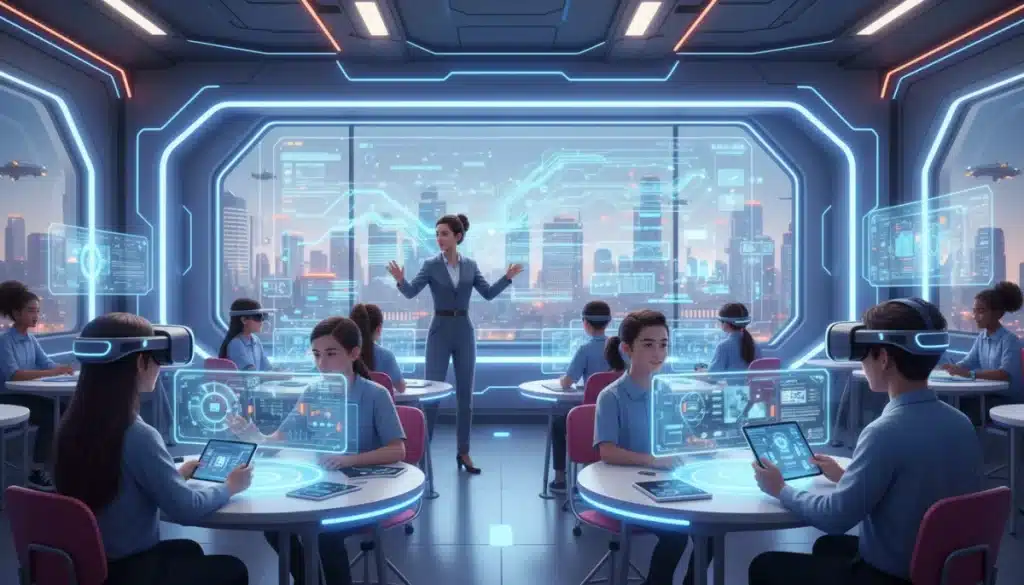
EdTech Trends in 2025 will revolutionize US classrooms by integrating artificial intelligence, virtual and augmented reality, personalized learning platforms, and advanced data analytics to create dynamic and highly effective educational environments.
The educational landscape is constantly evolving, and as we approach 2025, the pace of technological integration in learning environments is accelerating. The impact of these advancements on US classrooms is profound, promising to reshape how students learn and how educators teach. This article delves into the most significant EdTech Trends in 2025: 5 Technologies Revolutionizing US Classrooms, offering a glimpse into the future of education.
The Rise of Artificial Intelligence in Learning
Artificial Intelligence (AI) is no longer a futuristic concept; it is rapidly becoming an integral part of educational technology. In 2025, AI’s presence in US classrooms will be pervasive, offering tools that adapt to individual student needs and streamline administrative tasks for educators. This integration promises a more efficient and responsive learning experience for all.
AI-powered platforms are designed to understand each student’s learning pace, strengths, and weaknesses. This allows for the delivery of customized content and exercises, ensuring that every student receives the support they need to succeed. The goal is to move beyond a one-size-fits-all approach to education.
Personalized Learning Pathways
One of the most significant contributions of AI to education is its ability to create truly personalized learning pathways. These systems analyze student performance data in real-time, identifying areas where a student might be struggling or excelling, and then adjusting the curriculum accordingly.
- Adaptive Assessments: AI-driven assessments can dynamically change questions based on a student’s previous answers, providing a more accurate measure of understanding than traditional tests.
- Content Recommendation Engines: Similar to streaming services, AI can recommend educational resources, videos, and articles tailored to a student’s specific learning style and interests.
- Intelligent Tutoring Systems: These systems offer immediate feedback and guidance, acting as a virtual tutor available 24/7, helping students grasp complex concepts at their own pace.
Automating Administrative Tasks
Beyond direct student interaction, AI also plays a crucial role in reducing the administrative burden on teachers. This frees up valuable time for educators to focus on direct instruction and personalized student support, rather than being bogged down by grading or scheduling.
From automated grading of multiple-choice questions and basic essays to scheduling parent-teacher conferences and managing classroom logistics, AI tools are enhancing operational efficiency within schools. This allows teachers to dedicate more energy to the art of teaching and fostering student relationships.
In conclusion, AI’s growing influence in education by 2025 is set to transform both the pedagogical approach and the operational efficiency of US classrooms. Its ability to personalize learning and automate routine tasks promises a more effective and engaging educational future.
Immersive Learning with VR and AR
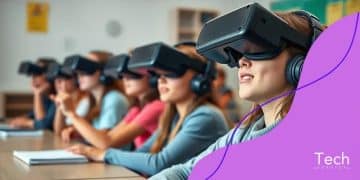
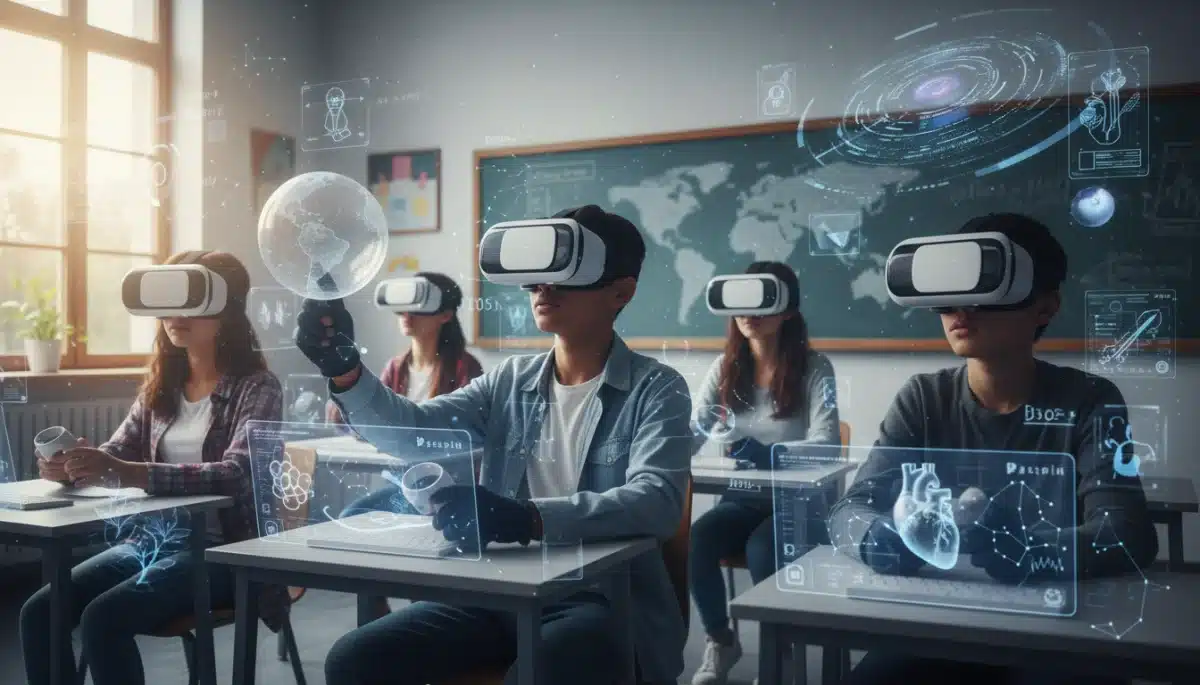
Virtual Reality (VR) and Augmented Reality (AR) are poised to move beyond niche applications and become powerful tools for immersive learning in US classrooms by 2025. These technologies offer unparalleled opportunities to transport students to different times, places, and even microscopic worlds, making abstract concepts tangible and engaging.
The potential of VR and AR in education lies in their capacity to create experiences that are not possible within the confines of a traditional classroom. Imagine dissecting a virtual frog without ethical concerns or exploring historical sites as if you were truly there.
Virtual Field Trips and Simulations
VR allows students to embark on virtual field trips to distant lands, historical events, or even the depths of the ocean. This eliminates geographical and financial barriers, making rich, experiential learning accessible to all. Simulations can provide safe environments for practicing complex procedures or understanding scientific phenomena.
From exploring ancient Rome to witnessing a volcanic eruption, VR creates an unforgettable learning experience. These simulations are not just passive viewing; many platforms allow for interaction, fostering a deeper understanding and retention of information.
Augmented Reality for Enhanced Textbooks and Labs
AR, on the other hand, overlays digital information onto the real world. This can transform traditional textbooks into interactive experiences, where 3D models pop out from pages, or complex diagrams can be animated and manipulated. In science labs, AR can provide virtual overlays for experiments, guiding students through procedures and visualizing molecular structures.
- Interactive Textbooks: Students can point their devices at a textbook page and see 3D models, animations, or additional information appear.
- Virtual Lab Assistants: AR can guide students through complex experiments, providing real-time instructions and safety warnings.
- Anatomy Exploration: Overlaying anatomical structures onto a human body model allows for interactive and detailed study without the need for physical specimens.
In essence, VR and AR will revolutionize engagement by making learning an active, sensory experience. By 2025, these immersive technologies will be critical in creating dynamic and memorable educational journeys for students across the US.
The Power of Personalized and Adaptive Learning Platforms
Building on the capabilities of AI, personalized and adaptive learning platforms are becoming increasingly sophisticated, offering a truly tailored educational experience. These platforms analyze student data to deliver content, assessments, and feedback that perfectly match individual learning styles and paces, ensuring no student is left behind or held back.
The shift from a standardized curriculum to one that adapts to each learner is a monumental change in education. By 2025, these platforms will be commonplace, offering unprecedented flexibility and effectiveness in US classrooms.
Tailoring Content to Individual Needs
Personalized learning platforms go beyond simply adjusting difficulty; they can also cater to different learning modalities. Some students thrive with visual aids, while others prefer auditory explanations or hands-on activities. These platforms can identify and deliver content in the most effective format for each student.
This level of customization ensures that students are always challenged appropriately, preventing both boredom from overly simplistic material and frustration from content that is too advanced. The goal is to keep students in their optimal learning zone.
Adaptive Assessment and Feedback Loops
Adaptive assessment is a core component of these platforms. Instead of static tests, assessments evolve based on student responses, providing a more accurate measure of understanding and identifying specific areas for improvement. The feedback provided is immediate, targeted, and actionable, allowing students to learn from their mistakes in real-time.
- Diagnostic Testing: Initial assessments pinpoint existing knowledge gaps and strengths.
- Dynamic Questioning: Questions adjust in difficulty and topic based on previous answers, ensuring a precise evaluation.
- Instant Remediation: If a student struggles, the platform immediately offers supplementary materials or alternative explanations.
Ultimately, personalized and adaptive learning platforms represent a paradigm shift in education. By 2025, their widespread adoption will empower educators to meet diverse student needs more effectively, leading to improved outcomes across US classrooms.
Enhanced Digital Literacy and Citizenship Education
As technology becomes more integrated into every aspect of life, the importance of digital literacy and citizenship education has never been greater. By 2025, US classrooms will place an even stronger emphasis on equipping students with the skills to navigate the digital world safely, critically, and responsibly. This goes beyond simply knowing how to use software; it encompasses understanding the ethical implications of technology.
Digital literacy is no longer an optional skill; it is a fundamental requirement for success in the 21st century. Schools are recognizing the need to prepare students not just for careers, but for life in an increasingly connected world.
Critical Evaluation of Online Information
With the proliferation of information online, students must develop strong critical thinking skills to discern credible sources from misinformation and disinformation. Education in 2025 will focus on teaching students how to evaluate websites, identify biases, and understand the algorithms that shape their online experiences.
This involves teaching students to ask probing questions about the source, purpose, and context of online content. Developing a healthy skepticism and the ability to cross-reference information will be paramount.
Cybersecurity and Online Safety
Protecting personal information and understanding cybersecurity threats are essential components of digital citizenship. Classrooms will educate students on safe online practices, including creating strong passwords, recognizing phishing attempts, and understanding the implications of their digital footprint.
- Privacy Awareness: Understanding how personal data is collected, used, and protected online.
- Digital Footprint Management: Teaching students about the permanence of online content and how to manage their digital identity responsibly.
- Recognizing Cyberbullying: Educating students on how to identify, prevent, and respond to cyberbullying.
In summary, enhanced digital literacy and citizenship education in 2025 will ensure that students are not just consumers of technology, but informed, responsible, and ethical participants in the digital age, vital for their success and well-being.
Collaborative Learning Tools and Global Connectivity
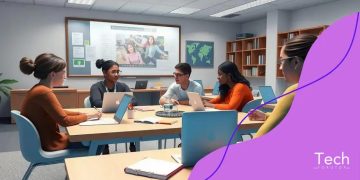
The traditional classroom model, often isolated, is being transformed by collaborative learning tools and global connectivity. By 2025, US classrooms will increasingly leverage technology to facilitate teamwork, peer-to-peer learning, and connections with students and experts worldwide. This fosters a more dynamic, inclusive, and globally aware learning environment.
These tools break down physical barriers, allowing students to work together on projects regardless of their location. This not only enhances teamwork skills but also exposes students to diverse perspectives and cultures.
Cloud-Based Collaboration Platforms
Cloud-based platforms allow students to co-create documents, presentations, and projects in real-time. Tools like Google Workspace, Microsoft 365 Education, and specialized educational platforms provide shared workspaces where students can contribute, comment, and revise together, mirroring professional work environments.
These platforms maintain version histories, ensuring that all contributions are tracked and that students can easily revert to earlier stages of a project if needed. This transparency fosters accountability and a deeper understanding of collaborative processes.
Connecting with Global Classrooms and Experts
Technology enables US classrooms to connect with peers in other countries, fostering cross-cultural understanding and global perspectives. Video conferencing tools facilitate virtual exchanges, joint projects, and discussions with students from different backgrounds. Additionally, connecting with experts in various fields, regardless of their location, enriches learning experiences.
- Virtual Pen Pals: Students can connect with peers internationally for language exchange or cultural understanding projects.
- Expert Q&A Sessions: Live video calls with scientists, authors, or professionals provide real-world insights and career inspiration.
- Shared Research Projects: Collaborating on research with students from other regions or countries expands perspectives and analytical skills.
Ultimately, collaborative learning tools and global connectivity will make classrooms more interactive and interconnected by 2025. This fosters essential 21st-century skills like teamwork, communication, and global awareness, preparing students for an increasingly interconnected world.
Data Analytics for Educational Improvement
Beyond individual student progress, educational institutions are increasingly leveraging data analytics to identify broader trends, assess program effectiveness, and make informed decisions to improve the entire learning ecosystem. By 2025, data analytics will be a cornerstone of educational improvement in US classrooms, moving beyond simple test scores to provide a holistic view of student and institutional performance.
This involves collecting and analyzing vast amounts of data, from student engagement metrics to curriculum effectiveness, to pinpoint areas for enhancement and celebrate successes more accurately. The goal is to create a continually optimizing educational environment.
Identifying Learning Gaps and Program Effectiveness
Data analytics can reveal patterns in student performance across cohorts, highlighting common learning gaps or areas where the curriculum might need adjustment. By analyzing this data, educators and administrators can identify which teaching methodologies are most effective and which programs yield the best results.
This allows for evidence-based decision-making, ensuring that resources are allocated efficiently and that interventions are targeted where they are most needed. It provides a clear picture of what is working and what requires refinement.
Predictive Analytics for Early Intervention
One of the most powerful applications of data analytics is its predictive capability. By analyzing historical data and current student performance, systems can identify students at risk of falling behind before significant issues arise. This enables early intervention, providing timely support to prevent academic struggles.
- Early Warning Systems: Flagging students who show early signs of disengagement or academic difficulty.
- Resource Allocation: Informing decisions on where to direct tutoring services or additional support staff.
- Curriculum Adjustment: Identifying parts of the curriculum that consistently lead to student struggles and suggesting improvements.
In essence, data analytics will empower educators and administrators with actionable insights by 2025, driving continuous improvement in teaching practices and student outcomes across US classrooms. This data-driven approach ensures that educational strategies are effective and responsive to evolving needs.
| Key EdTech Trend | Brief Description |
|---|---|
| Artificial Intelligence | AI personalizes learning paths and automates administrative tasks, enhancing efficiency and student engagement. |
| VR/AR Immersive Learning | Virtual and Augmented Reality create engaging, experiential learning environments through simulations and interactive content. |
| Personalized Learning Platforms | Platforms adapt content and assessments to individual student needs, optimizing learning pace and style for better outcomes. |
| Digital Literacy & Citizenship | Focus on critical evaluation of online information, cybersecurity, and responsible digital behavior for all students. |
Frequently Asked Questions about EdTech in 2025
AI will personalize learning by analyzing student performance data in real-time, identifying individual strengths and weaknesses. It will then adapt curriculum content, recommend tailored resources, and provide immediate, customized feedback, ensuring each student receives optimal support at their own pace.
VR and AR offer immersive, experiential learning that traditional methods cannot. They enable virtual field trips, realistic simulations for complex subjects, and interactive overlays for textbooks and labs. This makes abstract concepts tangible, enhances engagement, and deepens understanding for students.
Digital literacy is crucial because students need to navigate an increasingly complex digital world safely and critically. Education will focus on evaluating online information, understanding cybersecurity, managing digital footprints, and recognizing online threats like misinformation and cyberbullying, preparing them for responsible digital citizenship.
Collaborative learning tools will foster essential 21st-century skills like teamwork, communication, and critical thinking. They allow students to co-create projects in real-time, connect with global peers for cross-cultural understanding, and interact with experts, preparing them for an interconnected professional world.
Data analytics will provide insights into learning gaps and program effectiveness across student cohorts. It enables predictive analysis for early intervention with at-risk students and helps administrators make evidence-based decisions on resource allocation and curriculum adjustments, leading to continuous educational improvement.
Conclusion
As we look toward 2025, the landscape of US classrooms is undeniably being reshaped by a wave of transformative EdTech trends. Artificial intelligence, virtual and augmented reality, personalized learning platforms, enhanced digital literacy initiatives, and robust data analytics are not merely supplementary tools; they are becoming foundational elements of a modern, effective educational system. These technologies promise to create more engaging, equitable, and efficient learning environments, preparing students not just for academic success, but for the complexities of a rapidly evolving global society. The continued integration and thoughtful application of these innovations will be key to unlocking the full potential of every learner in the years to come.