Fed Rate Adjustments Q2 2025: Urgent Update & Market Impact
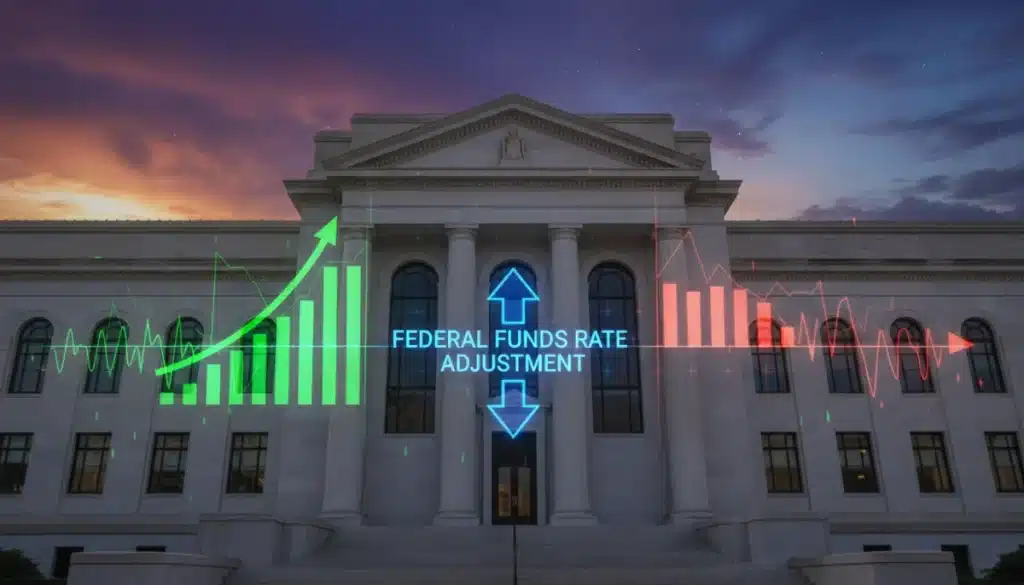
The Federal Reserve is signaling potential interest rate adjustments in Q2 2025, driven by evolving inflation data and labor market conditions, which could significantly impact borrowing costs and investment strategies.
Are you ready for the potential economic shifts on the horizon? An Urgent Update: Federal Reserve Signaling Potential Interest Rate Adjustments in Q2 2025 indicates a pivotal moment for financial markets and everyday consumers. Understanding these signals is crucial for navigating what lies ahead.
Understanding the Federal Reserve’s Mandate and Tools
The Federal Reserve, often simply called the Fed, plays a critical role in shaping the economic landscape of the United States. Its primary mandate involves maintaining maximum employment, stable prices, and moderate long-term interest rates. These objectives are interconnected and guide the Fed’s decisions regarding monetary policy, particularly interest rate adjustments. The tools at its disposal are powerful and far-reaching, influencing everything from the cost of borrowing for businesses to the interest earned on savings accounts for individuals.
At the core of the Fed’s operational framework is the federal funds rate, which is the target rate for overnight lending between banks. While the Fed does not directly control this rate, it influences it through various mechanisms. Open market operations, for instance, involve the buying and selling of government securities to inject or withdraw money from the banking system, thereby affecting the supply of reserves and, consequently, the federal funds rate. This rate, in turn, serves as a benchmark for a wide array of other interest rates across the economy, including those on mortgages, car loans, and credit cards. When the Fed signals a potential adjustment, it sends ripples through the entire financial system.
Key Monetary Policy Tools
- Federal Funds Rate: The primary policy rate, influencing short-term borrowing costs.
- Open Market Operations: Buying or selling government securities to control the money supply.
- Discount Rate: The interest rate at which commercial banks can borrow directly from the Fed.
- Reserve Requirements: The amount of funds banks must hold in reserve, impacting available lending capital.
Beyond these direct tools, the Fed also communicates its intentions and economic outlook through forward guidance. This involves providing clear statements about the likely future path of monetary policy, helping to anchor market expectations and reduce uncertainty. Such guidance is particularly important during periods of economic transition or instability, as it allows businesses and consumers to make more informed decisions. The recent signals regarding Q2 2025 adjustments fall firmly within this realm of strategic communication, preparing the market for potential shifts well in advance.
The Economic Indicators Driving Potential Adjustments
The Federal Reserve’s decisions are not made in a vacuum; they are meticulously crafted responses to a complex web of economic data. Several key indicators consistently draw the Fed’s attention, acting as barometers for the health and trajectory of the U.S. economy. Understanding these indicators is paramount to grasping why the Fed might be signaling potential interest rate adjustments in Q2 2025. These data points provide a comprehensive picture of inflationary pressures, labor market strength, and overall economic growth, all of which are central to the Fed’s dual mandate.
Inflation data remains a primary concern for the Fed. Measures such as the Consumer Price Index (CPI) and the Personal Consumption Expenditures (PCE) price index are closely monitored to assess the pace of price increases. Persistent inflation above the Fed’s 2% target often prompts a hawkish stance, indicating a need for higher interest rates to cool down the economy. Conversely, signs of decelerating inflation might provide room for more accommodative policies. The current trajectory of inflation, while moderating, still presents challenges that the Fed must carefully balance against other economic objectives.
Crucial Economic Data Points
- Inflation Rates (CPI, PCE): Tracking the cost of goods and services.
- Employment Figures (Unemployment Rate, Job Growth): Gauging labor market health.
- Wage Growth: An indicator of potential inflationary pressures from the labor side.
- GDP Growth: Measuring the overall economic output.
The labor market is another critical pillar of the Fed’s assessment. Strong job growth and low unemployment rates typically signal a robust economy, but they can also contribute to inflationary pressures, particularly through wage increases. The Fed analyzes a range of labor statistics, including non-farm payrolls, the unemployment rate, and labor force participation, to understand the dynamics of employment and its implications for inflation. The delicate balance between a strong labor market and controlled inflation is a constant challenge for policymakers, influencing the timing and magnitude of any rate changes. Furthermore, global economic conditions and geopolitical events also play a role, as they can impact supply chains, commodity prices, and overall economic sentiment, adding layers of complexity to the Fed’s decision-making process.
Analyzing the Fed’s Recent Communications and Stance
The Federal Reserve’s communications are a carefully orchestrated ballet of speeches, meeting minutes, and economic projections. These pronouncements are not merely informative; they are powerful tools designed to guide market expectations and influence financial behavior. When the Fed signals potential interest rate adjustments in Q2 2025, it’s a deliberate act, a form of forward guidance aimed at preparing investors, businesses, and consumers for what may come. Analyzing these communications requires a keen eye for nuance and an understanding of the subtle shifts in language used by Fed officials.
Recent statements from Fed Chair Jerome Powell and other members of the Federal Open Market Committee (FOMC) have consistently emphasized a data-dependent approach. This means that future policy decisions, including any rate adjustments, will hinge directly on how economic indicators evolve over the coming months. While there’s a clear desire to bring inflation back to target, there’s also a strong commitment to avoiding unnecessary economic contraction. This dual focus creates a dynamic environment where market participants are constantly re-evaluating their positions based on the latest economic releases and official commentaries.


Key Aspects of Fed Communication
- FOMC Statements: Official releases after each policy meeting outlining decisions and outlook.
- Chair’s Speeches: Public addresses often providing deeper insights into Fed thinking.
- Meeting Minutes: Detailed summaries offering a glimpse into internal discussions and dissenting views.
- Summary of Economic Projections (SEP): Quarterly forecasts for GDP, inflation, and interest rates.
The shift towards Q2 2025 for potential adjustments, rather than an earlier date, suggests a cautious approach. It implies that the Fed believes current policy settings are appropriate for the near term but acknowledges that evolving conditions might necessitate changes further down the line. This forward-looking perspective allows the market ample time to digest the information and adjust expectations, ideally leading to smoother transitions. However, any unexpected turns in economic data could accelerate or delay these anticipated adjustments, underscoring the importance of staying attuned to every new piece of information from the Fed.
Potential Impact on Financial Markets and Investments
The prospect of Fed rate adjustments Q2 2025 has significant implications for financial markets across the board. Investors, traders, and fund managers are meticulously analyzing every signal from the Federal Reserve to position their portfolios strategically. Changes in interest rates directly influence borrowing costs, corporate earnings, and the relative attractiveness of different asset classes, creating both opportunities and challenges. Understanding these potential impacts is essential for anyone involved in the financial world, from institutional investors to individual savers.
One of the most immediate effects of interest rate adjustments is on bond markets. When the Fed raises rates, newly issued bonds typically offer higher yields, making existing bonds with lower yields less attractive. This often leads to a decrease in the price of older bonds. Conversely, a rate cut can boost bond prices as their fixed payments become more valuable relative to new, lower-yielding issues. For equity markets, the impact is more nuanced. Higher interest rates can increase borrowing costs for companies, potentially squeezing profit margins and making future earnings less valuable when discounted back to the present. This can lead to downward pressure on stock prices, especially for growth companies that rely heavily on debt financing.
Market Segments to Watch
- Fixed Income: Bond yields and prices will react directly to rate changes.
- Equities: Higher rates can impact corporate earnings and stock valuations.
- Real Estate: Mortgage rates are tied to the federal funds rate, affecting housing affordability.
- Currencies: Interest rate differentials influence currency exchange rates.
Furthermore, the expectation of rate changes can influence capital flows. Higher rates in the U.S. can attract foreign investment seeking better returns, strengthening the dollar. A stronger dollar, while beneficial for some, can make U.S. exports more expensive and impact multinational corporations’ earnings when repatriating foreign profits. Real estate markets are also highly sensitive, as mortgage rates tend to move in tandem with the federal funds rate. Any adjustment could affect housing demand, affordability, and overall market dynamics. Investors will need to carefully re-evaluate their asset allocation strategies, considering the potential shifts in risk-adjusted returns across various investment vehicles in anticipation of these changes.
How Consumers and Businesses Might Be Affected
The ripple effects of Fed rate adjustments Q2 2025 extend far beyond the confines of Wall Street, directly impacting the financial lives of everyday consumers and the operational strategies of businesses. These adjustments influence everything from the cost of a mortgage to the profitability of a small business, making it crucial for individuals and enterprises alike to prepare for potential changes. The Fed’s actions are designed to manage the broader economy, but their consequences are felt acutely at the micro-level.
For consumers, the most noticeable impact often comes through borrowing costs. If interest rates rise, loans for homes, cars, and credit card debt become more expensive. This can reduce discretionary spending and cool down consumer demand, which is often the Fed’s intention when combating inflation. Conversely, lower rates can stimulate borrowing and spending, providing a boost to economic activity. Savers, particularly those with money in traditional bank accounts or certificates of deposit (CDs), might see changes in their returns. Higher rates generally mean better returns on savings, while lower rates can diminish them, encouraging people to seek higher-yielding investments.
Consumer and Business Impacts
- Borrowing Costs: Mortgages, auto loans, credit cards will see rate changes.
- Savings Returns: Interest earned on bank deposits and CDs may adjust.
- Business Investment: Cost of capital for expansion and operations will shift.
- Employment Decisions: Businesses may adjust hiring based on economic outlook and borrowing costs.
Businesses face a similar set of challenges and opportunities. Higher interest rates increase the cost of borrowing for capital expenditures, expansion projects, and even day-to-day operations if they rely on lines of credit. This can lead to a slowdown in investment and, potentially, hiring. Small businesses, often more sensitive to changes in credit conditions, might find it harder to access affordable financing. On the flip side, lower rates can encourage business investment and growth, as the cost of capital decreases. Companies will need to reassess their debt structures, investment plans, and pricing strategies in anticipation of these adjustments, ensuring they remain competitive and financially sound within the evolving economic environment. The foresight provided by the Fed’s signals allows proactive planning.
Strategies for Navigating Potential Rate Changes
As the Federal Reserve signals potential interest rate adjustments in Q2 2025, proactive planning becomes paramount for both individuals and businesses. Navigating these changes successfully requires a clear understanding of personal or corporate financial positions and the implementation of strategic measures. Waiting until the adjustments are enacted could mean missing out on opportunities or incurring avoidable costs. Therefore, developing a robust strategy now is a wise move to mitigate risks and capitalize on potential benefits.
For individuals, reviewing and potentially refinancing existing variable-rate debt, such as adjustable-rate mortgages or certain lines of credit, could be a smart move if rates are expected to rise. Locking in a fixed rate now might provide stability and predictability in future payments. Conversely, if rates are expected to fall, it might be strategic to hold off on new borrowing or consider refinancing later. Evaluating investment portfolios is also crucial. Diversification across various asset classes, including those less sensitive to interest rate fluctuations, can help cushion against volatility. Consulting with a financial advisor can provide personalized guidance tailored to individual circumstances and risk tolerance.
Key Strategies for Preparation
- Review Debt: Consider refinancing variable-rate loans to fixed rates.
- Assess Investments: Diversify portfolios to reduce interest rate sensitivity.
- Build Savings: Create a financial buffer for unexpected changes.
- Budget Adjustments: Re-evaluate spending habits in anticipation of higher costs.
Businesses, particularly those with significant debt or plans for capital expansion, should also be proactive. Locking in favorable interest rates on loans or lines of credit now, if an increase is anticipated, can protect against higher financing costs in the future. Revisiting cash flow projections and stress-testing financial models against different interest rate scenarios can help identify vulnerabilities and build resilience. Exploring alternative financing options or optimizing operational efficiencies to reduce reliance on debt can also be beneficial. For companies with substantial cash reserves, potential rate increases could offer opportunities for better returns on short-term investments. Adapting pricing strategies and supply chain management to account for potential economic shifts will also be vital for maintaining competitiveness and profitability in a changing rate environment.
| Key Point | Brief Description |
|---|---|
| Fed’s Q2 2025 Signal | The Federal Reserve indicates potential interest rate changes, preparing markets for future monetary policy shifts. |
| Economic Drivers | Decisions are based on inflation, labor market data, and overall economic growth trends. |
| Market & Consumer Impact | Affects borrowing costs, investment returns, corporate profits, and housing markets. |
| Proactive Strategies | Individuals and businesses should review debt, diversify investments, and adjust budgets. |
Frequently Asked Questions About Fed Rate Adjustments
It means the Fed is communicating its expectation for potential changes to interest rates around the second quarter of 2025. This forward guidance helps markets and the public prepare, indicating that economic conditions, particularly inflation and employment, are being closely monitored for necessary policy adjustments.
If you have a variable-rate mortgage, your monthly payments could increase with a rate hike or decrease with a cut. For fixed-rate mortgages, your payments remain stable, but future homebuyers will face higher or lower rates depending on the Fed’s action, impacting affordability and market demand.
Potentially, yes. When the Fed raises interest rates, banks often increase the interest rates they offer on savings accounts, CDs, and money market accounts, leading to higher returns for savers. Conversely, rate cuts typically result in lower savings rates, reducing the yield on deposits.
The Federal Reserve primarily focuses on inflation data, such as the CPI and PCE price index, and labor market indicators, including the unemployment rate and job growth. They also consider overall economic growth (GDP), wage trends, and global economic conditions to make informed monetary policy decisions.
Businesses should review their debt structures, consider locking in favorable interest rates on loans, and re-evaluate capital expenditure plans. Stress-testing financial models and optimizing operational efficiencies can also help mitigate risks and prepare for potential shifts in borrowing costs and consumer demand.
Conclusion
The Federal Reserve’s signal regarding potential interest rate adjustments in Q2 2025 underscores a dynamic period for the U.S. economy. These anticipated shifts are not merely technical financial maneuvers but rather critical responses to evolving economic conditions, with far-reaching implications for individuals and businesses alike. Staying informed about the Fed’s communications, understanding the underlying economic indicators, and proactively developing financial strategies are essential steps for navigating the upcoming changes. The ability to adapt and plan thoughtfully will be key to mitigating risks and seizing opportunities in this evolving financial landscape.