Retirement Benefits in 2025: Maximize Your Pension and Social Security

Strategic planning is essential for navigating 2025 retirement benefits, optimizing both pension and Social Security to secure a robust financial future for American retirees.
Are you looking ahead to retirement in 2025 and wondering how to secure your financial future? Understanding and maximizing your retirement benefits in 2025: a guide to maximizing your pension and Social Security is not just a good idea, it’s a necessity. This comprehensive guide will walk you through the essential steps and considerations to ensure you make the most of your hard-earned benefits.
Understanding Your Pension Options in 2025
Pensions, while less common than in previous decades, still represent a significant source of retirement income for many Americans. In 2025, understanding the intricacies of your specific pension plan is paramount to maximizing its value. These plans can vary widely, from traditional defined-benefit plans to more flexible defined-contribution arrangements, each with its own set of rules and payout options.
It’s crucial to obtain a detailed summary plan description from your employer or former employer. This document outlines the terms of your pension, including eligibility requirements, vesting schedules, and payment options. Many plans offer choices like a single-life annuity, a joint and survivor annuity, or even a lump-sum distribution. Each option has distinct financial implications for you and your beneficiaries.
Defined-Benefit vs. Defined-Contribution Plans
- Defined-Benefit Plans: These traditional pensions promise a specific monthly payment in retirement, often based on your salary history and years of service. The employer bears the investment risk.
- Defined-Contribution Plans: Examples include 401(k)s and 403(b)s, where you and/or your employer contribute to an individual account. Your retirement income depends on the performance of your investments.
For defined-benefit plans, understanding the actuarial calculations behind your payout options is key. A joint and survivor annuity, for instance, might offer a lower monthly payment during your lifetime but provides continued income for your spouse after your passing. This choice involves balancing immediate income needs with long-term financial security for your loved ones. Always consider your health, your spouse’s health, and other sources of retirement income when making this decision.
Furthermore, be aware of any cost-of-living adjustments (COLAs) that might be built into your pension plan. Not all pensions offer COLAs, meaning that the purchasing power of your fixed payment could erode over time due to inflation. If your pension does not include COLAs, you might need to plan for other income streams or adjust your spending habits in later retirement years. Consulting with a financial advisor specializing in retirement planning can provide invaluable insights tailored to your unique situation, helping you navigate these complex choices effectively.
Navigating Social Security Benefits in 2025
Social Security remains a cornerstone of retirement income for most Americans. The rules and claiming strategies for Social Security can significantly impact the total benefits you receive over your lifetime. For those approaching retirement in 2025, understanding these rules and making informed decisions is more important than ever.
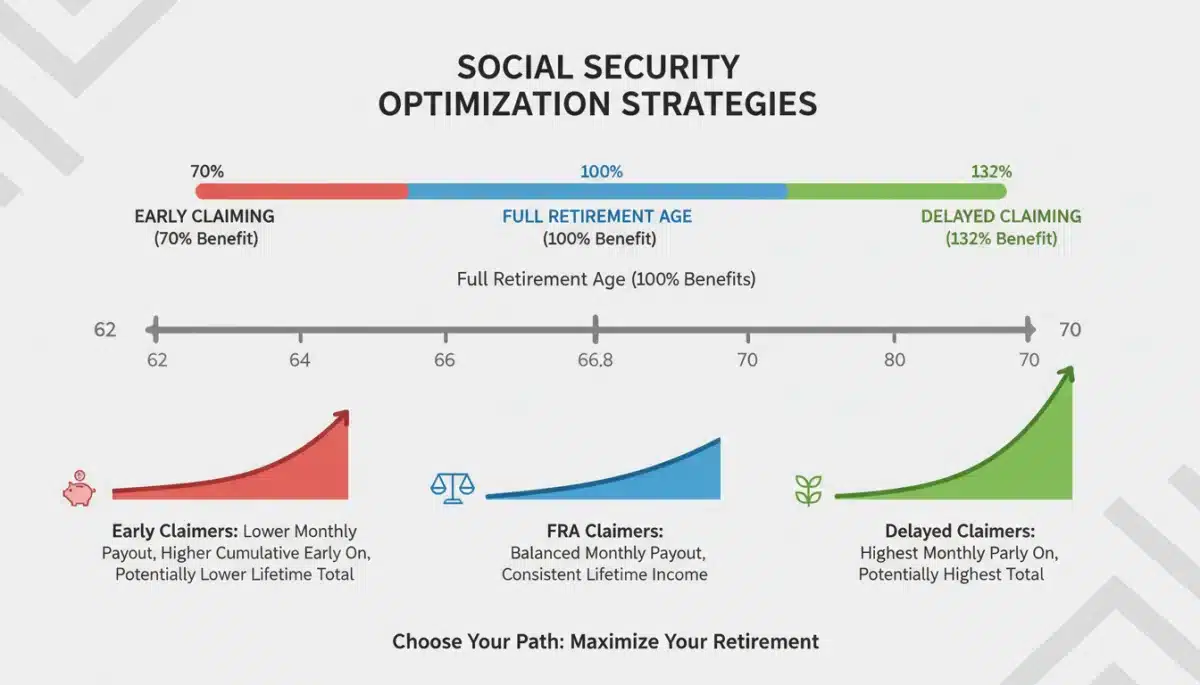
The primary factor influencing your Social Security benefit amount is your claiming age. You can start receiving benefits as early as age 62, but your monthly payment will be permanently reduced. Your full retirement age (FRA), which varies depending on your birth year, is when you are eligible to receive 100% of your primary insurance amount (PIA). Delaying benefits beyond your FRA, up to age 70, can result in an increase of approximately 8% per year in delayed retirement credits.
Key Social Security Claiming Strategies
- Claiming Early (Age 62): Provides immediate income but results in a reduced monthly benefit. This might be suitable if you need the income or have health concerns.
- Claiming at Full Retirement Age (FRA): You receive 100% of your earned benefit. This is a balanced approach for many retirees.
- Delaying Benefits (Up to Age 70): Maximizes your monthly benefit, offering the highest possible payment. This strategy is ideal if you have other income sources and can afford to wait.
Spousal benefits and survivor benefits also add layers of complexity and opportunity. If your spouse has higher earnings, you might be eligible for a spousal benefit that is up to 50% of their full retirement age benefit. Similarly, survivor benefits can provide crucial financial support to a surviving spouse or dependent children. Understanding how these benefits interact with your own work record is essential for optimizing your household’s total Social Security income.
It’s also vital to monitor any changes to Social Security legislation or regulations that might be proposed or enacted in the coming years. While major overhauls are often debated, smaller adjustments can still impact future benefits. Staying informed through reliable sources like the Social Security Administration’s website or reputable financial news outlets will help you adapt your planning as needed. The decisions you make regarding when and how to claim Social Security will have long-lasting effects on your financial well-being throughout retirement.
Integrating Pension and Social Security for Optimal Income
The true art of maximizing your retirement benefits in 2025 lies in strategically integrating your pension and Social Security. These two pillars of retirement income are not independent; their claiming strategies and payout options should be considered in conjunction to create a cohesive and robust financial plan. A holistic approach can significantly enhance your overall financial security throughout your retirement years.
One common strategy involves using one benefit to bridge the gap while delaying the other. For example, if you have a pension that allows for early retirement, you might consider taking your pension payments early to cover living expenses, allowing you to delay claiming Social Security until age 70. This maximizes your Social Security benefit, which is often inflation-adjusted, providing a larger, more secure income stream later in life.
Strategic Integration Considerations
- Health and Longevity: If you anticipate a long lifespan, maximizing inflation-adjusted Social Security benefits by delaying claiming might be more advantageous.
- Spousal Benefits: Coordinate claiming strategies with your spouse to maximize combined household benefits, especially if there’s a significant difference in earnings history.
- Other Income Sources: Consider income from investments, part-time work, or other retirement accounts when deciding when to claim your pension and Social Security.
Conversely, if your pension offers a substantial lump-sum option, you might consider taking it to invest for growth, while carefully timing your Social Security claim. However, a lump sum comes with its own risks, including investment volatility and the temptation to spend it too quickly. It requires a disciplined investment strategy and a clear understanding of market dynamics to be successful.
Another crucial aspect is understanding how taxes will affect your combined income. Both pension payments and Social Security benefits can be subject to federal income tax, and in some states, state income tax as well. Planning for these tax implications is vital to avoid unexpected financial burdens. Consulting with a financial advisor specializing in retirement planning can help you develop strategies to minimize your tax liability and retain more of your hard-earned money. The goal is to create a seamless income stream that adapts to your evolving needs and provides lasting financial stability.
Inflation and Cost of Living Adjustments (COLAs)
Inflation is a silent erosion of purchasing power, and its impact on your retirement benefits in 2025 should not be underestimated. Understanding how your pension and Social Security benefits are affected by inflation and whether they include Cost of Living Adjustments (COLAs) is crucial for long-term financial planning. A fixed income stream, without COLA protection, will buy less over time, potentially leading to a decrease in your quality of life.
Social Security benefits typically include annual COLAs, which are designed to help benefits keep pace with inflation. These adjustments are based on the Consumer Price Index for Urban Wage Earners and Clerical Workers (CPI-W) and are announced late in the year for the following year. While these adjustments don’t always perfectly match the actual cost of living increases retirees experience, they do provide a vital buffer against inflation.
Protecting Against Inflation’s Impact
- Review Pension COLA: Check if your pension plan offers a COLA. If not, consider how to supplement that income with other inflation-protected assets.
- Diversify Investments: Hold a portion of your retirement portfolio in assets that historically perform well during inflationary periods, such as real estate or certain commodities.
- Budgeting and Spending: Adjust your retirement budget to account for rising costs, especially in areas like healthcare and groceries.
Many private and public sector pensions, however, do not offer COLAs, or they offer very limited ones. This means that a pension payment received today will have less purchasing power in 10 or 20 years. If your pension lacks robust COLA protection, you will need to rely more heavily on other inflation-adjusted income sources or investment growth to maintain your desired lifestyle.
This is where strategic investment planning becomes essential. Consider allocating a portion of your retirement savings to investments that have a history of outpacing inflation, such as dividend-paying stocks, real estate investment trusts (REITs), or Treasury Inflation-Protected Securities (TIPS). While no investment is without risk, a diversified portfolio can help mitigate the long-term effects of inflation on your overall wealth. Proactive planning for inflation ensures that your retirement income continues to meet your needs throughout your golden years.
Healthcare Costs in Retirement: A Major Factor
One of the most significant financial considerations for retirees in 2025, and indeed every year, is healthcare. The costs associated with medical care can be substantial and often unpredictable, potentially consuming a large portion of your retirement income if not properly planned for. Understanding your options, primarily Medicare, and budgeting for out-of-pocket expenses is absolutely critical for a secure retirement.
Medicare typically becomes available at age 65, providing coverage for hospital stays (Part A), medical insurance (Part B), and prescription drugs (Part D). However, Medicare is not free. You will still be responsible for premiums, deductibles, copayments, and coinsurance. Many retirees also choose to enroll in Medicare Advantage plans (Part C) or Medigap policies to help cover these out-of-pocket costs and provide additional benefits.
Managing Healthcare Expenses
- Understand Medicare Parts: Familiarize yourself with Medicare A, B, C, and D to choose the best combination for your needs.
- Budget for Out-of-Pocket: Even with Medicare, expect to pay for premiums, deductibles, and co-pays. Consider a Health Savings Account (HSA) if eligible.
- Long-Term Care Planning: Explore options like long-term care insurance or self-funding for potential future long-term care needs, which Medicare generally does not cover.
The cost of prescription drugs can also be a major concern. Part D plans vary widely in terms of premiums, deductibles, and formulary (the list of covered drugs). It’s important to review your Part D options annually during the open enrollment period to ensure your plan still meets your needs and offers the most cost-effective coverage for your specific medications.
Beyond traditional medical care, long-term care is another significant expense that many retirees overlook. Medicare generally does not cover custodial care, which includes assistance with daily activities like bathing, dressing, and eating. Long-term care insurance can help cover these costs, but it can be expensive, and eligibility may depend on your health. Exploring options like self-funding, hybrid policies, or state-specific programs is vital. Proactive planning for healthcare costs ensures that unexpected medical expenses don’t derail your carefully constructed retirement plan, allowing you to maintain financial independence and access the care you need.
Tax Implications of Retirement Income
Understanding the tax implications of your retirement income is essential for maximizing your net benefits in 2025. Both your pension and Social Security benefits can be subject to federal and, in some cases, state income taxes. Proper tax planning can significantly reduce your tax burden, allowing you to retain more of your hard-earned money and enjoy a more comfortable retirement.
Pension payments, whether from a defined-benefit plan or distributions from a defined-contribution plan like a 401(k), are generally taxed as ordinary income. The specific amount taxed depends on whether your contributions were pre-tax or after-tax. If you contributed pre-tax dollars, the entire distribution is typically taxable. If you made after-tax contributions, only the earnings portion is taxed.
Key Tax Planning Strategies
- Roth Conversions: Consider converting traditional IRA or 401(k) funds to a Roth account during lower-income years to enjoy tax-free withdrawals in retirement.
- Tax-Efficient Withdrawals: Develop a strategy for withdrawing funds from different account types (taxable, tax-deferred, tax-free) to minimize overall tax liability.
- State Tax Laws: Be aware of your state’s tax laws regarding pension and Social Security income, as some states offer exemptions or lower tax rates for retirees.
Social Security benefits can also be taxable, depending on your ‘combined income.’ Your combined income is your adjusted gross income (AGI) plus any tax-exempt interest and half of your Social Security benefits. If your combined income exceeds certain thresholds, up to 85% of your Social Security benefits may be subject to federal income tax. These thresholds are not adjusted for inflation, which means more retirees may find their benefits taxed over time.
Furthermore, state tax laws vary significantly regarding retirement income. Some states do not tax pension income or Social Security benefits at all, while others tax them partially or fully. If you are considering relocating in retirement, researching the tax friendliness of potential new states is a crucial step in your financial planning. Engaging with a qualified tax advisor can provide personalized guidance on how to structure your withdrawals and manage your income to optimize your tax situation throughout your retirement years, ensuring you keep more of what you’ve earned.
Seeking Professional Financial Guidance
While this guide provides a comprehensive overview, the complexities of maximizing your retirement benefits in 2025 often necessitate personalized professional financial guidance. A qualified financial advisor can offer tailored advice, helping you navigate the intricate landscape of pensions, Social Security, investments, and taxes, ensuring your retirement plan is robust and aligned with your personal goals and risk tolerance.
An experienced financial planner can help you create a detailed retirement income strategy. This involves analyzing your current assets, projected expenses, and various income streams to develop a sustainable withdrawal plan. They can also assist with optimizing your Social Security claiming strategy, considering factors like your health, spousal benefits, and other income sources to determine the most advantageous time to begin receiving benefits.
Benefits of Professional Advice
- Personalized Strategy: A plan tailored to your unique financial situation, goals, and risk profile.
- Optimized Claiming: Expert guidance on when and how to claim Social Security and pension benefits for maximum lifetime income.
- Tax Efficiency: Strategies to minimize tax liabilities on your retirement income and withdrawals.
- Investment Management: Assistance with managing your investment portfolio to ensure it aligns with your retirement timeline and objectives.
Beyond income planning, financial advisors can also help you with estate planning, ensuring your assets are distributed according to your wishes and minimizing potential probate issues. They can guide you through the process of setting up wills, trusts, and designating beneficiaries, providing peace of mind for you and your loved ones. Their expertise extends to risk management, helping you assess and mitigate potential financial threats through appropriate insurance coverage and emergency funds.
When selecting a financial advisor, look for someone who is a fiduciary, meaning they are legally obligated to act in your best interest. Consider their credentials, experience, and fee structure. A good advisor will take the time to understand your complete financial picture and educate you on your options, empowering you to make informed decisions. Investing in professional guidance can ultimately lead to a more confident, secure, and prosperous retirement, allowing you to enjoy your golden years without undue financial stress.
| Key Point | Brief Description |
|---|---|
| Pension Options | Understand defined-benefit vs. defined-contribution and payout choices for maximum value. |
| Social Security Strategy | Timing your claim (early, FRA, or delayed) significantly impacts lifetime benefits. |
| Inflation Protection | Account for COLAs in Social Security and pension; diversify investments to combat inflation. |
| Tax Planning | Strategize withdrawals and understand federal/state taxes on retirement income. |
Frequently Asked Questions About 2025 Retirement Benefits
The ‘best’ age depends on individual circumstances. Claiming at age 70 maximizes your monthly benefit, while claiming at your Full Retirement Age (FRA) provides 100% of your primary benefit. Early claiming at 62 results in a permanent reduction but provides immediate income.
Generally, pension payments are subject to federal income tax. State tax laws vary, with some states exempting pension income and others taxing it. The amount taxed federally depends on whether your contributions were pre-tax or after-tax.
Inflation erodes purchasing power. Social Security includes annual Cost of Living Adjustments (COLAs), but many pensions do not. It’s crucial to plan for inflation by diversifying investments or having other inflation-protected income sources to maintain your lifestyle.
While not mandatory, a qualified financial advisor can provide personalized strategies for optimizing pension and Social Security, managing investments, and navigating tax implications. Their expertise can significantly enhance your financial security and peace of mind.
Medicare (Parts A, B, D) is essential, but retirees must budget for premiums, deductibles, and co-pays. Consider Medicare Advantage or Medigap. Long-term care is often not covered by Medicare, requiring separate planning or insurance.
Conclusion
Planning for retirement benefits in 2025 requires a proactive and informed approach. By thoroughly understanding your pension options, strategically navigating Social Security claiming, integrating these income streams, accounting for inflation, managing healthcare costs, and planning for taxes, you can build a resilient financial foundation. While the journey may seem complex, the reward is a secure and comfortable retirement. Remember, seeking professional financial guidance can provide invaluable support, ensuring your unique circumstances are addressed and your financial goals are met. Start planning today to maximize your retirement potential and enjoy the future you’ve worked so hard for.