US GDP Growth: 2.8% Projected for 2025 Amidst Global Shifts
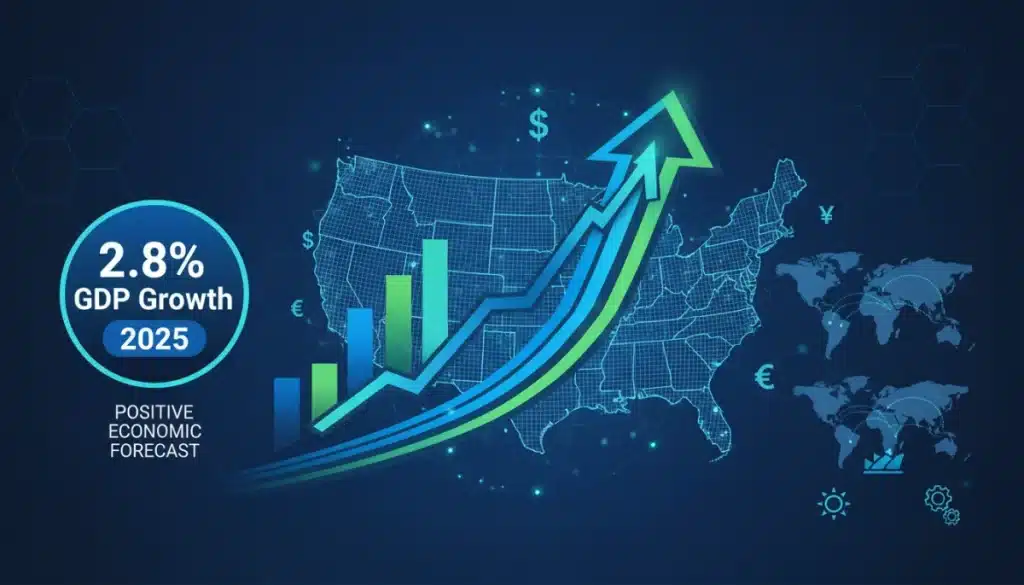
The US GDP is projected to achieve a 2.8% growth in 2025, reflecting a resilient economy navigating complex global shifts and domestic policy adjustments.
The economic landscape is constantly evolving, and understanding future trends is crucial for businesses, investors, and policymakers alike. The latest consensus points to a significant development: the US GDP growth projected at 2.8% for 2025 amidst global shifts. This forecast offers a beacon of stability and potential expansion in an otherwise unpredictable world, prompting a deeper dive into the underlying factors and potential implications.
Understanding the 2.8% GDP Growth Projection
The projection of a 2.8% GDP growth for the United States in 2025 is a carefully calculated estimate, drawing upon a myriad of economic indicators and expert analyses. This figure suggests a healthy, albeit moderate, expansion, indicating that the nation’s economy is expected to continue its upward trajectory, adapting to both domestic challenges and international influences. It reflects a belief in the inherent resilience of the US economic framework.
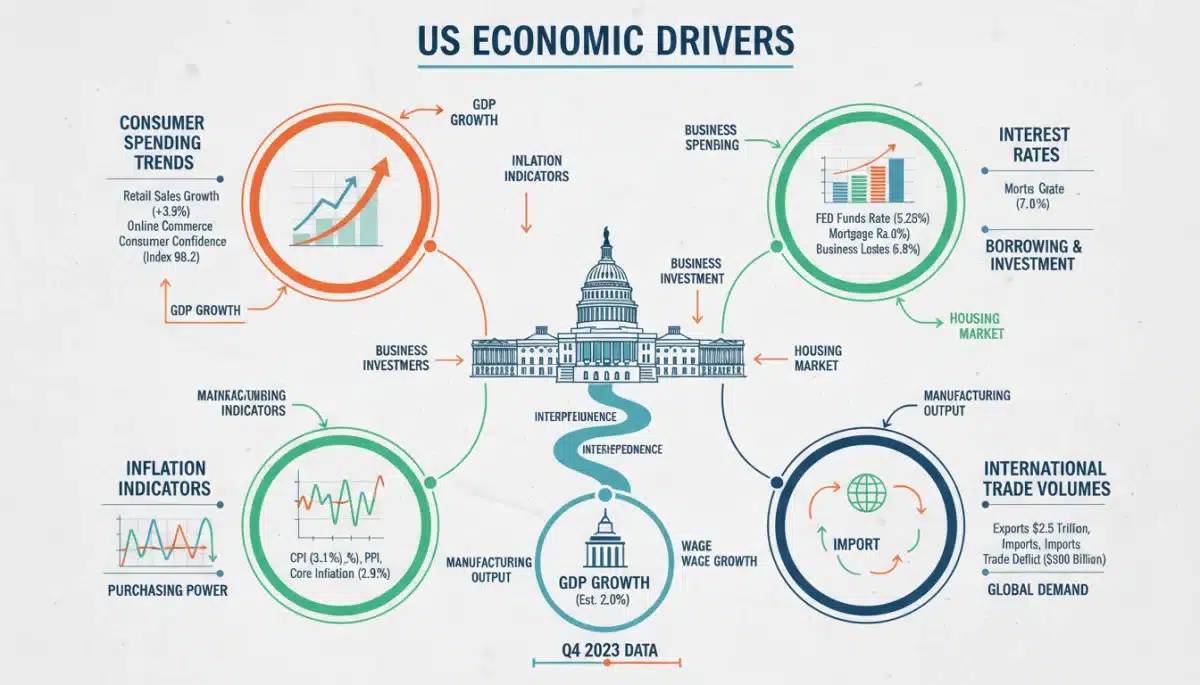
Several key components contribute to this optimistic outlook. Consumer spending, business investment, government expenditure, and net exports all play critical roles. Analysts meticulously examine historical data, current economic conditions, and future expectations across these sectors to arrive at such precise projections. The 2.8% figure is not just a number; it represents a synthesis of complex economic models and expert consensus, offering a forward-looking perspective on the nation’s financial health.
Key Drivers of Economic Expansion
The anticipated growth is not accidental; it is underpinned by several robust economic drivers. These include sustained consumer demand, which remains a cornerstone of the US economy, alongside strategic investments in technology and infrastructure that are expected to yield long-term benefits.
- Consumer Spending: A strong labor market and rising wages continue to fuel household consumption, which accounts for a significant portion of GDP.
- Business Investment: Companies are increasingly investing in automation, R&D, and capacity expansion, driven by competitive pressures and technological advancements.
- Government Initiatives: Public spending on infrastructure projects and green energy initiatives provides a substantial boost to various sectors.
Furthermore, the innovative spirit of American enterprise, particularly in emerging technologies like artificial intelligence and biotechnology, is set to create new industries and job opportunities, further propelling economic expansion. These internal strengths are crucial in buffering against external economic shocks and maintaining a steady growth path.
In conclusion, the 2.8% GDP growth projection for 2025 is a testament to the diverse and dynamic nature of the US economy. It is a reflection of sustained confidence in consumer behavior, strategic business decisions, and supportive governmental policies, all working in concert to foster a stable and growing economic environment.
Global Shifts and Their Impact on US Growth
The global economic landscape in 2025 is anticipated to be a complex tapestry of interconnected challenges and opportunities, directly influencing the projected US GDP growth. Geopolitical tensions, evolving trade relationships, and the varying economic health of major global players all contribute to this intricate environment. The US economy, while largely self-reliant, cannot operate in isolation, and the ripple effects from international shifts are undeniable.
One significant factor is the economic performance of key trading partners, such as China, the European Union, and emerging markets. Slower growth or instability in these regions can impact US exports and supply chains, potentially moderating domestic economic expansion. Conversely, a robust global recovery could provide additional tailwinds for American businesses operating internationally.
Geopolitical Dynamics and Trade Relations
Geopolitical events continue to shape trade policies and investment flows. Conflicts, sanctions, and diplomatic shifts can create uncertainties that affect global markets and, by extension, the US economy. Businesses must navigate these complexities, often adapting their supply chains and market strategies in response to international developments.
- Trade Agreements: Ongoing negotiations and existing agreements influence the cost and volume of goods exchanged, impacting various US industries.
- Supply Chain Resilience: Lessons from recent global disruptions are driving efforts to diversify supply chains, reducing vulnerabilities to regional instability.
- Energy Markets: Global energy prices, often influenced by geopolitical events, directly affect production costs and consumer purchasing power within the US.
The interplay between these factors demands a flexible and strategic approach from policymakers and businesses alike. The US economy’s ability to absorb and adapt to these global shifts will be crucial in achieving the projected 2.8% growth. Understanding these external pressures allows for better preparedness and more effective policy responses.
In summary, the 2.8% US GDP growth forecast for 2025 is not just an internal affair; it is deeply intertwined with the prevailing global economic climate. The ability of the US to leverage international opportunities while mitigating risks from global shifts will be a defining characteristic of its economic performance.
The Role of Monetary and Fiscal Policy
Monetary and fiscal policies are instrumental in steering the US economy towards its projected 2.8% GDP growth in 2025. These powerful tools, wielded by the Federal Reserve and the government, respectively, aim to stabilize prices, promote employment, and foster sustainable economic expansion. Their careful calibration is essential to counter inflationary pressures while supporting growth.
The Federal Reserve’s monetary policy, primarily through interest rate adjustments, influences borrowing costs for businesses and consumers. A stable and predictable interest rate environment encourages investment and spending, which are vital components of GDP. Conversely, overly restrictive policies could stifle growth, while excessively loose policies might ignite inflation.

Balancing Inflation and Growth
One of the primary challenges for policymakers is striking the right balance between controlling inflation and promoting economic growth. High inflation erodes purchasing power and creates uncertainty, while insufficient growth can lead to unemployment and stagnation. The 2.8% GDP projection suggests that a favorable balance is anticipated to be maintained.
- Interest Rate Decisions: The Federal Reserve’s decisions on the federal funds rate will be critical in managing liquidity and credit conditions.
- Government Spending: Fiscal policy, including government spending on infrastructure, defense, and social programs, directly injects money into the economy.
- Taxation Policies: Adjustments to tax rates for individuals and corporations can influence disposable income, investment incentives, and overall economic activity.
Fiscal policy, enacted by Congress and the Executive Branch, involves decisions on government spending and taxation. Targeted investments in key sectors can stimulate demand and enhance productivity, contributing to GDP growth. Similarly, tax incentives can encourage private sector investment and job creation. The synergy between these two policy arms is crucial for achieving the desired economic outcomes.
In conclusion, the projected 2.8% US GDP growth for 2025 heavily relies on the strategic and coordinated application of monetary and fiscal policies. These policies provide the necessary framework to navigate economic fluctuations, manage inflationary pressures, and sustain a trajectory of healthy economic expansion.
Sectoral Performance and Innovation
The anticipated 2.8% US GDP growth in 2025 will not be evenly distributed across all sectors; rather, it will be driven by the robust performance and innovative advancements within key industries. Understanding which sectors are poised for significant expansion and how technological breakthroughs are contributing is essential for a comprehensive economic outlook. The dynamism of the US economy is largely a reflection of its diverse and adaptable industrial base.
Technology continues to be a leading growth engine, with advancements in artificial intelligence, cloud computing, and cybersecurity creating new markets and enhancing productivity across existing ones. The healthcare sector, driven by an aging population and ongoing research into new treatments, also remains a significant contributor to economic activity. Manufacturing, particularly in areas like advanced materials and renewable energy components, is experiencing a resurgence, buoyed by strategic investments and policy support.
Emerging Technologies and Their Economic Impact
Innovation is not just about new products; it’s about transforming processes and creating entirely new economic paradigms. Emerging technologies are acting as catalysts for growth, improving efficiency, and opening up global opportunities.
- Artificial Intelligence: AI integration across various industries is streamlining operations, enhancing decision-making, and fostering new service offerings.
- Renewable Energy: Investments in solar, wind, and battery storage technologies are creating jobs and reducing reliance on fossil fuels, with significant economic and environmental benefits.
- Biotechnology: Advances in gene editing, personalized medicine, and pharmaceutical development are driving growth in the healthcare and life sciences sectors.
Beyond technology, the service sector, encompassing everything from financial services to hospitality, continues to be a dominant force, adapting to changing consumer preferences and digital transformation. The construction industry, supported by infrastructure initiatives and housing demand, also plays a vital role in employment and capital formation. Each sector contributes uniquely to the overall economic tapestry, and their combined strength underpins the positive GDP forecast.
To summarize, the projected 2.8% US GDP growth for 2025 is a testament to the strength and adaptability of its key economic sectors. Innovation, particularly in emerging technologies, coupled with steady performance in traditional industries, forms the bedrock of this optimistic economic outlook.
Potential Headwinds and Risks to the Forecast
While the projection of 2.8% US GDP growth for 2025 signals a generally positive outlook, it is crucial to acknowledge the potential headwinds and risks that could temper this forecast. Economic predictions are inherently subject to uncertainty, and a range of factors, both domestic and international, could deviate the economy from its anticipated path. Vigilance and adaptability are key to mitigating these potential challenges.
One significant domestic risk is persistent inflation, which, if not adequately managed, could erode consumer purchasing power and force the Federal Reserve to implement more aggressive monetary tightening, potentially slowing economic activity. Labor market dynamics, including wage growth and participation rates, also pose a risk. An overly tight labor market could fuel inflation, while a significant downturn could dampen consumer spending.
Global and Domestic Uncertainties
The international arena presents its own set of risks, ranging from escalating geopolitical conflicts to unforeseen global health crises. These external shocks can disrupt supply chains, impact trade volumes, and create financial market volatility, all of which can have a cascading effect on the US economy.
- Inflationary Pressures: Unexpected spikes in energy or commodity prices, or continued supply chain bottlenecks, could reignite inflationary concerns.
- Geopolitical Instability: Conflicts or political unrest in critical regions could disrupt global trade and investment flows, affecting US businesses.
- Financial Market Volatility: Sudden shifts in investor sentiment or unexpected market corrections could impact capital availability and business confidence.
Furthermore, domestic policy decisions, particularly regarding fiscal spending and regulatory changes, could introduce either positive or negative shocks. A lack of bipartisan consensus on critical economic issues could lead to policy paralysis, creating uncertainty for businesses and investors. The interplay of these diverse risks necessitates continuous monitoring and flexible policy responses to safeguard the projected growth trajectory.
In conclusion, while the 2.8% US GDP growth for 2025 is a strong possibility, it is not without its vulnerabilities. Acknowledging and proactively addressing potential headwinds, both global and domestic, will be essential in ensuring the US economy remains on a stable and prosperous path.
Opportunities for Businesses and Investors in 2025
The projected 2.8% US GDP growth for 2025 presents a fertile ground for businesses and investors seeking opportunities for expansion and returns. A growing economy typically translates into increased consumer demand, higher corporate profits, and a more favorable environment for capital deployment. Identifying and capitalizing on these opportunities will be crucial for strategic growth.
Businesses can leverage the anticipated growth by investing in innovation, expanding their market reach, and optimizing operational efficiencies. Sectors poised for strong performance, such as technology, healthcare, and renewable energy, offer particularly attractive prospects. Consumers with stable employment and rising wages are likely to drive demand for a wide range of goods and services, creating opportunities for both established companies and new ventures.
Strategic Investment Areas
For investors, the forecast offers clarity on where to allocate capital to maximize returns while managing risk. Diversification across high-growth sectors and resilient industries will be a key strategy.
- Technology Sector: Continued investment in AI, cybersecurity, and data analytics companies is expected to yield strong returns.
- Healthcare and Biotechnology: An aging population and ongoing medical innovations create sustained demand and growth potential.
- Infrastructure Development: Government-backed projects and private sector initiatives in infrastructure offer long-term investment opportunities.
Moreover, the emphasis on sustainability and ESG (Environmental, Social, and Governance) factors is opening up new avenues for investment in green technologies, sustainable agriculture, and socially responsible enterprises. Companies that align with these evolving consumer and investor values are likely to gain a competitive edge. The overall economic stability indicated by the GDP projection provides a solid foundation for both short-term gains and long-term strategic planning.
In conclusion, the 2.8% US GDP growth projection for 2025 is not merely a statistical figure; it represents a landscape rich with opportunities for businesses to innovate and expand, and for investors to strategically deploy capital. By understanding the underlying economic drivers and potential growth areas, stakeholders can position themselves for sustained success in the coming year.
| Key Aspect | Brief Description |
|---|---|
| GDP Projection | US GDP expected to grow by 2.8% in 2025, indicating moderate expansion. |
| Key Drivers | Consumer spending, business investment, and government initiatives fuel growth. |
| Global Influences | Geopolitical dynamics and trade relations significantly impact the US outlook. |
| Policy Role | Monetary and fiscal policies are crucial for balancing inflation and growth. |
Frequently Asked Questions About the 2025 US Economic Forecast
The forecast is largely driven by robust consumer spending, increased business investments in technology and infrastructure, and strategic government expenditures. A strong labor market and sustained innovation in key sectors also play significant roles in propelling this anticipated economic expansion.
Global economic shifts, including geopolitical tensions, fluctuating trade relations, and the economic performance of major trading partners, can significantly impact the US GDP. These external factors can influence supply chains, export demand, and overall market stability, requiring adaptability from the US economy.
Monetary policy, controlled by the Federal Reserve, manages interest rates to influence borrowing and spending. Fiscal policy, involving government spending and taxation, directly stimulates or cools the economy. Both are critical for balancing inflation control with the promotion of sustainable economic growth.
Key sectors expected to contribute significantly include technology (AI, cloud computing), healthcare (biotechnology, medical advancements), and renewable energy. These industries are driven by innovation and sustained demand, creating new opportunities and enhancing overall economic productivity.
Potential risks include persistent inflationary pressures, unforeseen geopolitical instability, significant disruptions in global supply chains, and financial market volatility. Domestic policy uncertainties and a tight labor market could also pose challenges to achieving the projected growth target.
Conclusion
The projection of US GDP growth projected at 2.8% for 2025 amidst global shifts paints a picture of a resilient and dynamic economy, capable of navigating complex domestic and international landscapes. This forecast is not merely a statistical figure but a reflection of underlying strengths in consumer demand, business innovation, and strategic policy management. While challenges such as inflation and geopolitical uncertainties remain pertinent, the proactive adaptation of key sectors and the coordinated efforts of monetary and fiscal authorities are expected to sustain a path of moderate yet significant expansion. For businesses and investors, this outlook signals a period ripe with opportunities, emphasizing the importance of strategic planning and agile responses to emerging trends. The coming year promises to be a crucial test of economic fortitude and adaptability, with the US economy poised to demonstrate its enduring capacity for growth and recovery.