US Consumer Confidence Soars to 12-Month High in December 2024

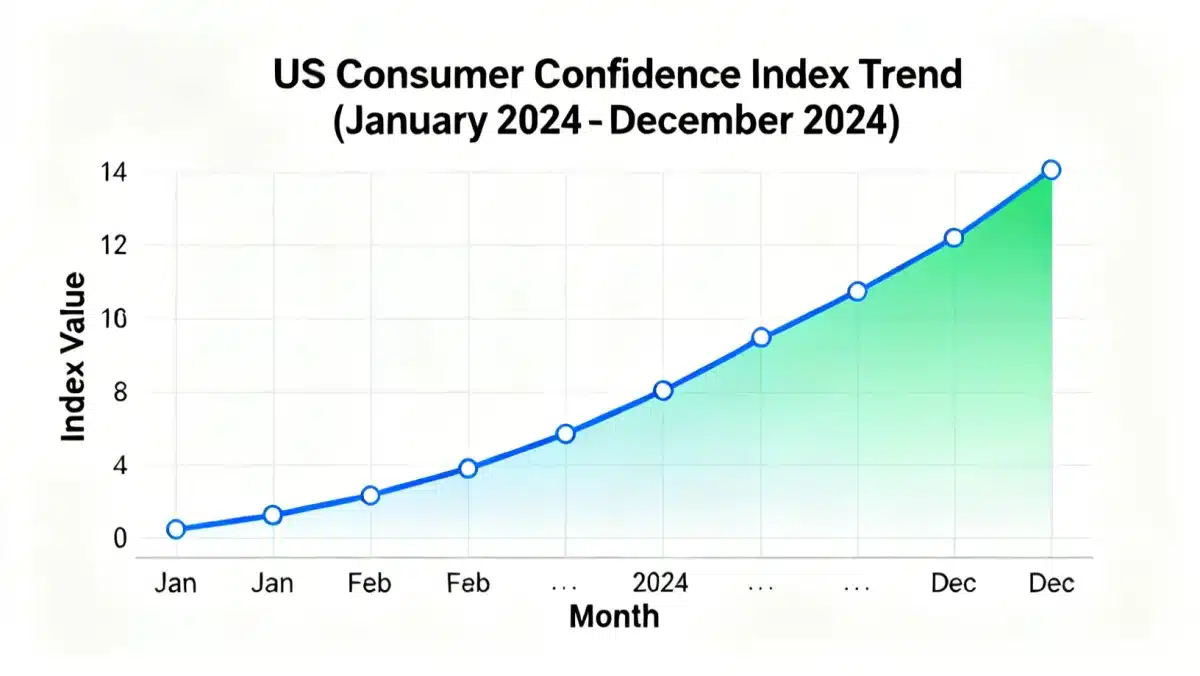
The latest report indicates that US consumer confidence reached a 12-month high in December 2024, reflecting growing optimism among American households regarding current economic conditions and future prospects, a key driver for sustained economic growth.
A new report confirms that US consumer confidence reaches a 12-month high in December 2024, providing a significant indicator of the nation’s economic health. This surge in optimism among American consumers could have far-reaching implications for spending patterns and overall market stability. What factors are driving this positive sentiment, and how might it shape the economic landscape in the coming year?
Understanding the Consumer Confidence Index
The Consumer Confidence Index (CCI) is a crucial economic indicator that measures the degree of optimism consumers feel about the overall state of the economy and their personal financial situation. This index, often released by organizations like The Conference Board, is based on surveys that ask households about their present and future economic outlook. A higher index generally suggests that consumers are more likely to spend money, which in turn stimulates economic growth.
In December 2024, the surge in US consumer confidence to a 12-month high reflects a significant shift in sentiment. This isn’t just a statistical anomaly; it signals a broader perception of stability and potential prosperity. Understanding the components of this index helps us grasp why this particular report is so impactful.
Key Components of the CCI
- Present Situation Index: This evaluates consumers’ appraisal of current business and labor market conditions.
- Expectations Index: This gauges consumers’ short-term outlook on income, business, and labor market conditions, typically for the next six months.
- Purchasing Intentions: While not a direct component of the main index, survey questions often delve into consumers’ plans for major purchases like homes, automobiles, and large appliances, offering further insight into future spending.
The December 2024 report indicates improvements across both the present situation and expectations components, suggesting a holistic increase in consumer optimism. This balanced growth provides a more robust foundation for economic projections than if only one component had improved significantly.
Factors Driving the December 2024 Surge
Several underlying factors have contributed to the remarkable increase in US consumer confidence during December 2024. These elements, ranging from stable employment figures to moderating inflation, have collectively fostered an environment where consumers feel more secure about their financial futures and the broader economy.
One primary driver appears to be the sustained strength of the labor market. Consistent job growth and low unemployment rates provide a sense of security for many households, reducing anxieties about income stability. When people feel confident in their jobs, they are more inclined to make discretionary purchases and invest in their future.
Economic Pillars Supporting Confidence
- Robust Job Market: Continued low unemployment rates and steady wage growth have empowered consumers.
- Moderating Inflation: A slowdown in the rate of price increases has alleviated some financial pressure on households, making their incomes stretch further.
- Stable Interest Rates: While rates have seen fluctuations, a period of perceived stability can encourage borrowing and investment.
Beyond these macroeconomic factors, specific policy decisions and global economic developments might also play a role. For instance, any positive legislative changes impacting consumer debt or direct financial aid could bolster confidence. Furthermore, a perceived easing of global supply chain issues or geopolitical tensions can reduce economic uncertainty, contributing to a more positive outlook. The interplay of these diverse factors creates a complex but ultimately favorable environment for consumer sentiment.
Impact on Retail and Spending Habits
The significant rise in US consumer confidence in December 2024 is expected to have a profound impact on retail sales and overall consumer spending habits. When consumers feel more secure about their financial situation and the economy’s future, they are generally more willing to open their wallets, leading to increased activity across various retail sectors.
This heightened confidence typically translates into stronger holiday season sales, particularly for non-essential goods and services. Retailers who have been navigating cautious spending throughout the year might see a much-needed boost. This also affects larger purchases, as consumers might be more inclined to buy new cars, appliances, or even consider home renovations.
Projected Retail Sector Benefits
- Increased Discretionary Spending: Consumers are likely to spend more on leisure, entertainment, and non-essential items.
- Stronger Holiday Sales: The December timing suggests a robust end-of-year shopping season for retailers.
- Boost for Durable Goods: Higher confidence often leads to increased purchases of big-ticket items like vehicles and household appliances.
Moreover, this shift isn’t just about immediate spending; it can also influence savings rates and investment behaviors. A confident consumer might feel more comfortable reducing their savings slightly to fund purchases or might be more open to taking on new debt for investments they believe will yield future returns. This dynamic can create a positive feedback loop, where increased spending further fuels economic growth and, in turn, reinforces consumer confidence.
Implications for the Housing Market
The surge in US consumer confidence in December 2024 carries significant implications for the housing market, a sector highly sensitive to consumer sentiment and financial stability. A confident consumer base is more likely to consider major investments, and for many Americans, purchasing a home is one of the most substantial financial decisions they make.
Increased optimism can lead to a greater willingness among potential homebuyers to enter the market, even amidst fluctuating interest rates. They might feel more secure in their employment and future earnings, making long-term mortgage commitments seem less daunting. This could translate into higher demand, potentially stabilizing or even increasing home prices in certain regions.
Potential Housing Market Shifts
- Increased Buyer Activity: More confident consumers may accelerate home-buying plans.
- Stabilization of Home Prices: Higher demand could reduce price volatility and lead to more consistent appreciation.
- Boost for New Construction: Developers might respond to increased demand by accelerating new housing projects.
Conversely, sellers might also feel more confident in listing their properties, expecting faster sales and better offers. This could lead to a healthier inventory balance, which is crucial for a sustainable housing market. However, the exact impact will also depend on other factors such as mortgage rates and the availability of affordable housing options. A strong consumer outlook provides a vital psychological boost, but market fundamentals will always play a critical role in the housing sector’s trajectory.
Economic Outlook and Future Projections
The December 2024 report indicating a 12-month high in US consumer confidence offers a generally optimistic economic outlook for the coming year. This elevated sentiment is a leading indicator, often preceding periods of increased economic activity and growth. Economists and policymakers will be closely watching whether this confidence can be sustained and translated into tangible economic gains.
If consumer optimism continues into the new year, it could lead to stronger GDP growth as spending increases across various sectors. Businesses, in turn, might respond by expanding operations, hiring more staff, and investing in new projects, creating a virtuous cycle of economic prosperity. This positive feedback loop is what policymakers often aim to achieve through various economic stimuli.
Key Economic Indicators to Watch
- GDP Growth: Sustained consumer confidence is a strong predictor of increased economic output.
- Inflation Rates: Monitoring whether increased demand leads to renewed inflationary pressures.
- Employment Data: Continued job creation and wage growth will be crucial for maintaining confidence.
However, it’s also important to consider potential headwinds. Geopolitical events, unexpected supply chain disruptions, or shifts in monetary policy could temper this optimism. While the current outlook is bright, economic projections are always subject to various internal and external variables. The sustained high level of consumer confidence provides a strong foundation, but careful monitoring of other economic indicators will be essential to accurately forecast future performance.
Challenges and Considerations Ahead
While the surge in US consumer confidence in December 2024 is undoubtedly positive news, it’s crucial to acknowledge the challenges and considerations that lie ahead. No economic indicator operates in a vacuum, and various factors could influence the longevity and impact of this newfound optimism. Understanding these potential headwinds allows for a more nuanced and realistic perspective on the economic landscape.
One significant challenge involves inflation. While moderating, the threat of renewed price increases could quickly erode consumer purchasing power and, by extension, their confidence. Central banks will need to carefully navigate monetary policy to ensure stability without stifling economic growth. The balance between controlling inflation and fostering expansion is delicate and constantly requires adjustment.
Potential Economic Headwinds
- Inflationary Pressures: Resurgent inflation could dampen consumer spending and confidence.
- Geopolitical Instability: Global events can quickly introduce uncertainty and impact supply chains.
- Interest Rate Volatility: Significant shifts in interest rates could affect borrowing costs and investment decisions.
Furthermore, global economic slowdowns in other major economies could indirectly affect the US through reduced export demand or increased financial market volatility. Domestic policy decisions, especially concerning fiscal spending and taxation, will also play a role in shaping the economic environment. The current high confidence provides a buffer, but proactive management of these challenges will be vital for sustaining economic momentum and ensuring that consumer optimism translates into long-term prosperity.
| Key Point | Brief Description |
|---|---|
| 12-Month High Achieved | US consumer confidence in December 2024 reached its highest level in a year. |
| Driving Factors | Strong job market, moderating inflation, and stable economic conditions fueled optimism. |
| Economic Impact | Positive effects expected on retail, housing, and overall GDP growth. |
| Future Considerations | Potential challenges include inflation, geopolitical risks, and interest rate changes. |
Frequently Asked Questions About Consumer Confidence
A 12-month high in consumer confidence signifies that consumers are more optimistic about the economy and their financial future than they have been in the past year. This usually translates into increased spending and investment, which can boost economic growth.
Consumer confidence is typically measured through surveys, such as The Conference Board’s Consumer Confidence Index. These surveys poll households on their perceptions of current and future economic conditions, including employment, business outlook, and income prospects.
The primary drivers for the December 2024 increase include a resilient job market with low unemployment, moderating inflation rates that ease financial burdens, and a general perception of economic stability. These factors collectively bolster consumer optimism.
Increased consumer confidence often has a positive impact on the stock market. Higher consumer spending can translate to increased corporate earnings, which in turn can drive stock prices up. It signals a healthy economic environment that investors favor.
Yes, potential risks include a resurgence of high inflation, unexpected geopolitical conflicts, significant increases in interest rates, or a slowdown in global economic growth. Any of these factors could diminish consumer optimism and reverse the positive trend.
Conclusion
The report confirming that US consumer confidence reached a 12-month high in December 2024 paints a promising picture for the nation’s economic trajectory. This surge in optimism, fueled by a robust job market and moderating inflation, is a powerful indicator of potential growth in consumer spending, retail activity, and even the housing market. While challenges such as inflation and global instability remain on the horizon, the current high level of confidence provides a strong foundation. Moving forward, careful monitoring of key economic indicators and adaptive policy-making will be crucial to sustain this positive momentum and ensure a prosperous outlook for American households and businesses.