Bridging the Skills Gap: US Education’s Industry Response by 2025
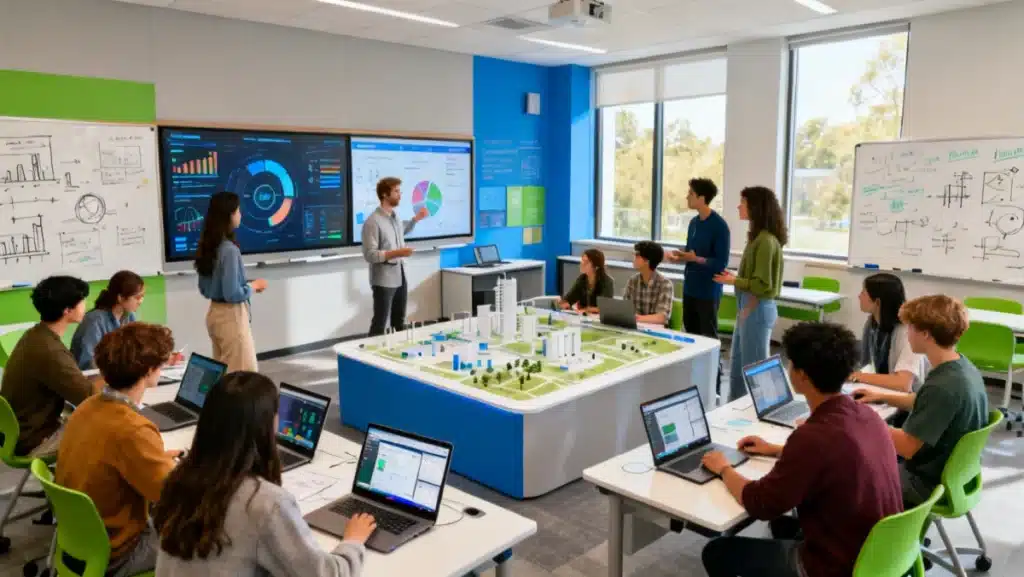
To bridge the skills gap by 2025, US education is proactively integrating industry-aligned curricula, promoting vocational training, and leveraging technology to prepare a future-ready workforce.
The landscape of the American workforce is undergoing a profound transformation, driven by rapid technological advancements and evolving global demands. This shift has created a significant challenge: a widening skills gap. In this dynamic environment, understanding how US education skills gap efforts are responding to industry needs by 2025 is not just crucial, but imperative for both individuals and the nation’s economic prosperity. How are educational institutions adapting to ensure graduates are equipped for the jobs of tomorrow?
Understanding the Evolving Skills Gap in the US
The concept of a skills gap is not new, but its current manifestation in the United States presents unique challenges. This gap refers to the disparity between the skills employers require for their workforce and the skills possessed by the available talent pool. Several factors contribute to this growing chasm, from the accelerating pace of technological innovation to shifting global economic forces. Recognizing these underlying causes is the first step toward developing effective educational responses.
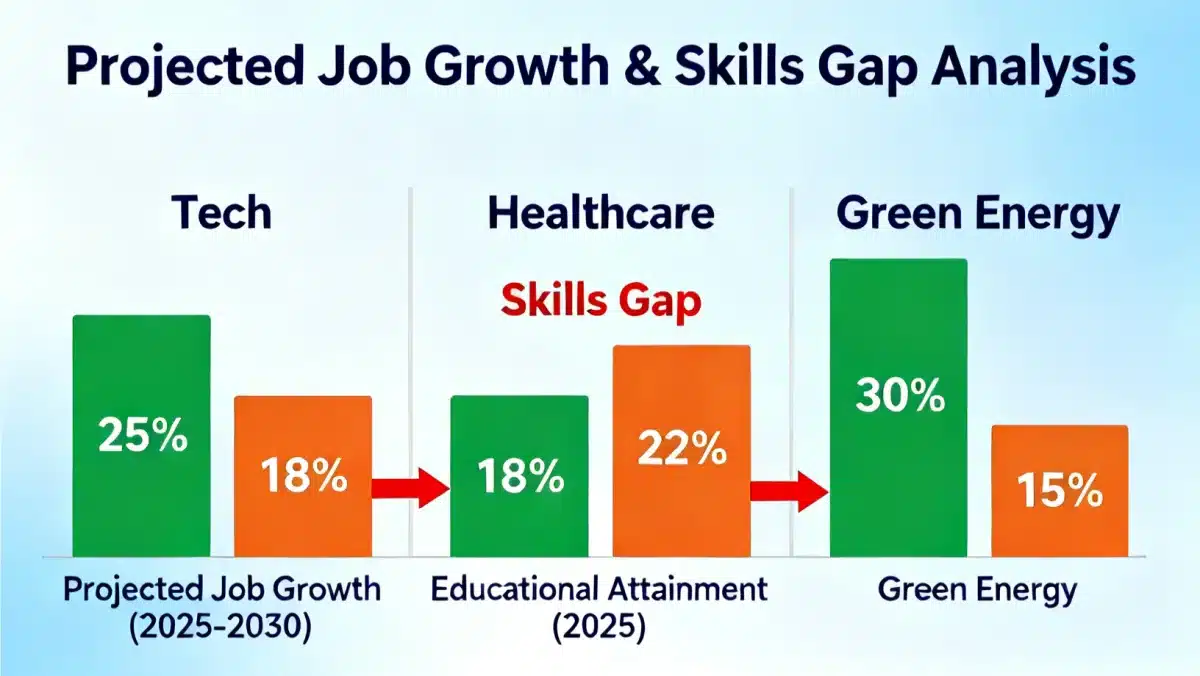
Industries such as technology, healthcare, manufacturing, and green energy are experiencing particularly acute shortages. For instance, the demand for cybersecurity professionals, data scientists, and AI specialists far outstrips the supply. Similarly, advanced manufacturing requires workers adept at robotics and automation, a far cry from traditional factory floor roles. The implications of this gap are far-reaching, impacting productivity, innovation, and economic competitiveness.
Key Drivers of the Skills Gap
- Technological Disruption: Automation, artificial intelligence, and big data are rapidly changing job descriptions and creating entirely new roles that require specialized digital literacy and analytical skills.
- Demographic Shifts: An aging workforce means a significant portion of experienced workers are retiring, taking institutional knowledge with them, and leaving a vacuum that younger, less experienced workers struggle to fill without adequate training.
- Globalization: Increased international competition and interconnected supply chains demand a workforce with adaptable skills, cross-cultural competence, and a global perspective.
- Insufficient STEM Graduates: Despite efforts, the US continues to produce fewer STEM graduates than needed to fill high-demand roles, particularly in advanced engineering and computer science fields.
The urgency to address this gap is palpable. Businesses struggle to find qualified candidates, leading to increased hiring costs, delayed projects, and reduced innovation. For individuals, a lack of relevant skills can lead to unemployment or underemployment, even in a thriving economy. Therefore, a comprehensive and agile response from the US education system is vital to ensure both economic growth and social mobility.
Curriculum Adaptation: Reshaping Learning for Future Jobs
One of the most direct ways US education is responding to industry needs by 2025 is through significant curriculum adaptation. Traditional educational models, often criticized for being too slow to evolve, are now undergoing rapid transformation to better align with contemporary and future job market demands. This involves not just updating course content but fundamentally rethinking how and what students learn.
Educational institutions, from K-12 schools to universities and vocational training centers, are embedding future-forward skills into their programs. This includes a stronger emphasis on critical thinking, problem-solving, creativity, and digital literacy – skills often referred to as 21st-century competencies. These are not merely add-ons but are being integrated across disciplines, ensuring students develop a holistic skill set relevant to a dynamic professional world.
Integrating Digital and Technical Skills
Beyond broad competencies, specific digital and technical skills are becoming paramount. Many educational programs are now incorporating:
- Coding and Programming: From introductory concepts in elementary schools to advanced software development in higher education, coding is increasingly seen as a foundational skill.
- Data Analytics: Courses in statistics, data visualization, and machine learning are being offered to prepare students for data-driven roles across various sectors.
- Cybersecurity: With the rise of digital threats, specialized programs in cybersecurity are crucial to protect critical infrastructure and data.
The goal is to move beyond rote memorization towards an application-based learning approach that empowers students to utilize their knowledge in practical, real-world scenarios. This shift is critical for ensuring that graduates are not just knowledgeable but also capable of immediately contributing to the workforce, thereby effectively addressing the US education skills gap.
The Rise of Industry-Education Partnerships
A pivotal strategy in bridging the skills gap is the proliferation of robust partnerships between educational institutions and industry. These collaborations are essential for ensuring that academic programs remain relevant and responsive to the rapidly changing demands of the job market. By working hand-in-hand, educators gain insights into current and future industry needs, while businesses benefit from a pipeline of well-prepared talent.
These partnerships take many forms, ranging from advisory boards composed of industry leaders who help shape curricula, to joint research projects that address real-world business challenges. The direct involvement of industry ensures that the skills being taught are precisely those required by employers, minimizing the disconnect often found between academic theory and practical application.

One prominent example is the growth of apprenticeship programs. Historically common in trades, apprenticeships are now expanding into high-tech and white-collar sectors. These programs combine on-the-job training with classroom instruction, allowing individuals to earn while they learn and gain valuable experience directly relevant to their chosen field. This model is highly effective in producing skilled workers who are immediately ready for employment.
Benefits of Stronger Collaboration
- Relevant Curriculum Development: Direct industry input ensures that courses cover the most current technologies, tools, and methodologies.
- Enhanced Internships and Co-ops: Businesses provide valuable experiential learning opportunities, giving students practical exposure and often leading to full-time employment.
- Resource Sharing: Companies may donate equipment, software, or expertise, enriching educational programs and providing students access to cutting-edge resources.
- Talent Pipeline Creation: Partnerships create a direct pathway for graduates into employment, reducing recruitment costs for businesses and improving job placement rates for educational institutions.
These strategic alliances are not just about filling immediate vacancies; they are about building a sustainable ecosystem where education continuously adapts to industry evolution, ensuring a resilient and competitive workforce for the future. This collaborative approach is a cornerstone of how US education skills gap initiatives are being tackled.
The Role of Vocational and Technical Training
While four-year university degrees remain a valued pathway, vocational and technical training programs are experiencing a resurgence as critical components in bridging the skills gap. These programs offer targeted, hands-on instruction in specific trades and technical fields, providing a direct route to employment in high-demand sectors. Community colleges, technical schools, and specialized training centers are at the forefront of this movement.
The appeal of vocational training lies in its efficiency and practicality. Students often complete programs in a shorter timeframe than traditional degrees, emerging with certifications and skills that are immediately applicable in the workforce. This makes vocational education an attractive option for individuals seeking rapid entry into a career or those looking to reskill or upskill in response to market changes.
Expanding Opportunities in Skilled Trades
- Electricians and Plumbers: Essential for infrastructure development and maintenance.
- HVAC Technicians: Crucial for maintaining climate control systems in residential and commercial buildings.
- Welding and Advanced Manufacturing: Key roles in modern industrial production, often involving complex machinery and robotics.
Beyond traditional trades, vocational programs are also expanding into emerging fields like renewable energy installation, medical assisting, and IT support. These programs are often designed with direct input from local employers, ensuring that the training provided meets regional industry needs. This localized approach is particularly effective in addressing specific workforce shortages and fostering economic development within communities, directly contributing to closing the US education skills gap.
Leveraging Technology for Enhanced Learning
Technology is not only a driver of the skills gap but also a powerful tool for bridging it. US education is increasingly leveraging digital tools and platforms to enhance learning experiences, expand access to education, and deliver more personalized and effective instruction. The integration of technology is transforming classrooms and training environments at every level.
Online learning, accelerated by recent global events, has become a mainstream and highly effective mode of education. It offers flexibility and accessibility, allowing individuals to pursue education and training regardless of their location or work schedule. This is particularly beneficial for working professionals looking to upskill or reskill without interrupting their careers. Massive Open Online Courses (MOOCs) and specialized online certification programs provide affordable and accessible pathways to acquire new competencies.
Innovative Technological Approaches
- Virtual and Augmented Reality (VR/AR): These technologies create immersive learning environments, allowing students to practice complex procedures or visualize abstract concepts in a safe and engaging way. For instance, medical students can perform virtual surgeries, or engineering students can design and test components in a simulated environment.
- Artificial Intelligence (AI) and Machine Learning (ML): AI-powered tools can personalize learning paths, provide adaptive assessments, and offer immediate feedback, tailoring the educational experience to individual student needs and learning paces.
- Blended Learning Models: Combining traditional in-person instruction with online components allows for a more dynamic and flexible educational experience, catering to diverse learning styles and schedules.
These technological advancements are not just about making learning more convenient; they are about making it more effective and scalable. By embracing these innovations, US education can reach a broader audience and deliver high-quality, relevant instruction that directly addresses the demands of the modern workforce, thus playing a crucial role in mitigating the US education skills gap.
Lifelong Learning and Upskilling Initiatives
In a rapidly changing world, the idea that education ends after formal schooling is obsolete. Lifelong learning and continuous upskilling have become necessities for individuals to remain competitive and for the workforce to adapt to new industry demands. US education systems are recognizing this shift and developing initiatives to support adult learners and career changers.
Many universities and community colleges now offer professional development courses, executive education programs, and micro-credentials designed for working adults. These programs are often shorter, more focused, and directly tied to specific industry needs, allowing individuals to acquire new skills or update existing ones without committing to a full degree program. The emphasis is on flexibility and immediate applicability.
Government and Employer-Led Programs
- Workforce Development Programs: Federal and state governments fund programs that provide training and job placement services for unemployed or underemployed individuals, often focusing on in-demand sectors.
- Employer-Sponsored Training: Many companies are establishing internal training academies or partnering with external providers to upskill their existing workforce, ensuring their employees have the competencies needed for future roles.
- Credentialing and Badging: The rise of digital badges and industry-recognized certifications offers verifiable proof of specific skills, providing an alternative to traditional degrees and making it easier for employers to identify qualified candidates.
These initiatives underscore a fundamental shift in how society views education – not as a one-time event, but as an ongoing process critical for personal and national economic resilience. By fostering a culture of continuous learning, the US education system is actively working to ensure that the workforce remains agile and capable of meeting future challenges, thereby closing the US education skills gap.
Policy and Funding: Supporting Educational Transformation
The ambitious efforts to bridge the skills gap require significant policy support and adequate funding. Government bodies at federal, state, and local levels are playing a crucial role in creating an environment that encourages educational innovation and strengthens the link between learning and employment. This involves legislative action, strategic investments, and the creation of frameworks that facilitate collaboration.
Policymakers are increasingly focused on incentivizing educational institutions to align their programs with workforce needs. This includes funding for career and technical education (CTE) programs, grants for institutions developing innovative curricula, and tax credits for businesses that invest in employee training. The goal is to ensure that resources are directed towards areas where the skills gap is most pronounced and where educational interventions can have the greatest impact.
Key Policy and Funding Initiatives
- Increased Investment in CTE: Policies supporting vocational and technical education are expanding, recognizing its direct contribution to skilled labor.
- Data-Driven Decision Making: Government and educational bodies are utilizing labor market data to inform curriculum development and program offerings, ensuring alignment with employer demand.
- Public-Private Partnerships: Policies are being developed to encourage and streamline collaborations between educational institutions and private industries, such as shared funding for training programs and infrastructure.
- Accessibility and Equity: Efforts are underway to ensure that educational opportunities, particularly in high-demand fields, are accessible to diverse populations, including underserved communities and displaced workers.
These policy and funding mechanisms are foundational to the success of educational responses to the skills gap. They provide the necessary resources and strategic direction to enable institutions to adapt, innovate, and effectively prepare the American workforce for the challenges and opportunities of 2025 and beyond. Sustained commitment in these areas is vital for the ongoing effort to close the US education skills gap effectively.
| Key Response | Brief Description |
|---|---|
| Curriculum Adaptation | Reshaping educational content to include 21st-century skills and industry-specific technical competencies like coding and data analytics. |
| Industry Partnerships | Collaborations between schools and businesses to align programs, offer apprenticeships, and provide real-world experience. |
| Vocational Training Boom | Expanded focus on technical and trade schools for rapid, hands-on skill acquisition in high-demand fields. |
| Tech-Enhanced Learning | Utilizing online platforms, VR/AR, and AI to make education more accessible, personalized, and effective. |
Frequently Asked Questions About the Skills Gap
The primary cause is the rapid evolution of technology and industry demands, which outpaces the traditional education system’s ability to adapt. This creates a mismatch between the skills workers possess and the specialized competencies employers require for emerging roles.
K-12 schools are integrating foundational 21st-century skills like critical thinking, problem-solving, and digital literacy. Many are also introducing STEM (Science, Technology, Engineering, and Mathematics) curricula and early exposure to coding and robotics to prepare younger students for future technical careers.
Community colleges are crucial, offering accessible, affordable, and often short-term vocational and technical programs directly aligned with local industry needs. They provide certifications and associate degrees that equip individuals with immediate job-ready skills for high-demand sectors.
Yes, apprenticeships are expanding beyond traditional trades into fields like IT, healthcare, and advanced manufacturing. These programs combine paid on-the-job training with classroom instruction, offering a practical pathway to acquire specialized skills and secure employment in emerging industries.
Individuals can proactively engage in lifelong learning by pursuing online courses, certifications, workshops, or advanced degrees. Continuously acquiring new skills, especially in areas like digital literacy, data analysis, and critical thinking, ensures adaptability and career resilience in an evolving job market.
Conclusion
The challenge of the skills gap in the US workforce is multifaceted, yet the responses from the education sector are robust and evolving. By 2025, the concerted efforts in curriculum reform, strategic industry partnerships, the revitalization of vocational training, and the innovative use of technology are poised to significantly strengthen the pipeline of skilled workers. These initiatives, supported by targeted policy and funding, underscore a national commitment to ensuring that American education remains a dynamic force in preparing a future-ready workforce, capable of navigating and succeeding in an ever-changing global economy. The journey to effectively bridge the US education skills gap is ongoing, but the foundation for success is being laid with determination and foresight.